

1. Voltage and Frequency
Czech Republic Standard: 230V voltage, 50Hz frequency.
US Standard: 120V voltage, 60Hz frequency.
Key Differences:
- Czech voltage is nearly double the US (230V vs 120V) — plugging a 120V-only device into a Czech outlet will instantly damage it
- Different frequency (50Hz vs 60Hz): Modern switched-mode power supplies handle both frequencies without issue, but devices with AC motors or frequency-dependent clocks may run approximately 17% slower
- Completely incompatible plugs: US uses Type A/B (flat blades), Czech Republic uses Type E (round pins with grounding pin from socket)
Risk Warning: Connecting 120V-only US appliances (hair dryers, curling irons, some kitchen appliances) directly into Czech 230V outlets will cause immediate device failure, potentially with sparks, smoke, or fire.
2. Local Outlet Types
The Czech Republic uses Type E outlets as its national standard, which are also compatible with Type C (Europlug) plugs.
Type E outlets feature two round holes for the plug pins and a protruding grounding pin on the outlet's faceplate. This grounding pin inserts into a corresponding hole on the plug body, providing earth protection for the connected device. Type E is the standard across the Czech Republic, France, Belgium, and Poland.

Type C plugs (Europlug) have two round 4mm pins spaced 19mm apart with no grounding connection. They fit into Type E sockets and are commonly found on low-power devices like phone chargers, laptop chargers, and small electronics throughout Europe.
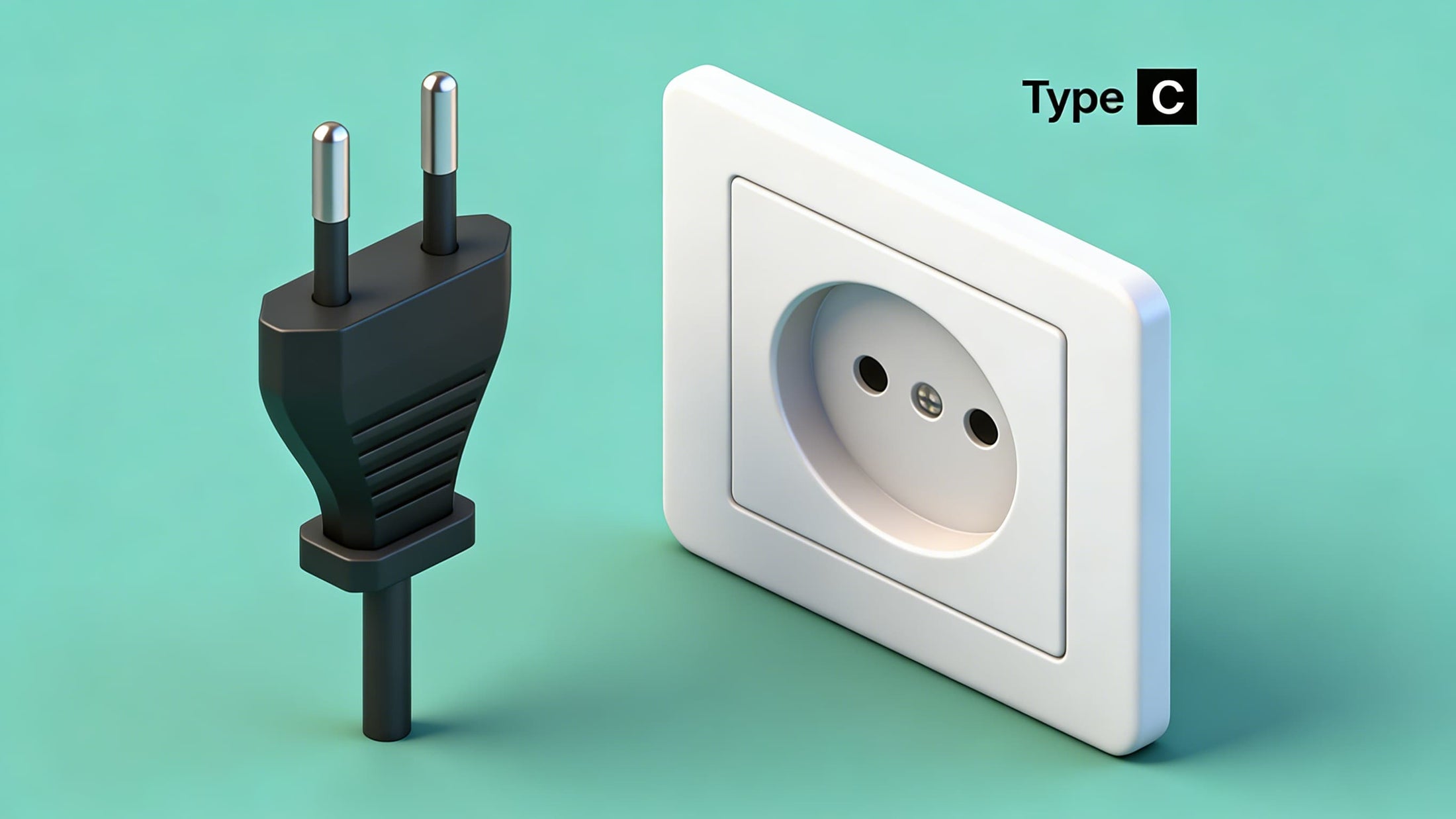
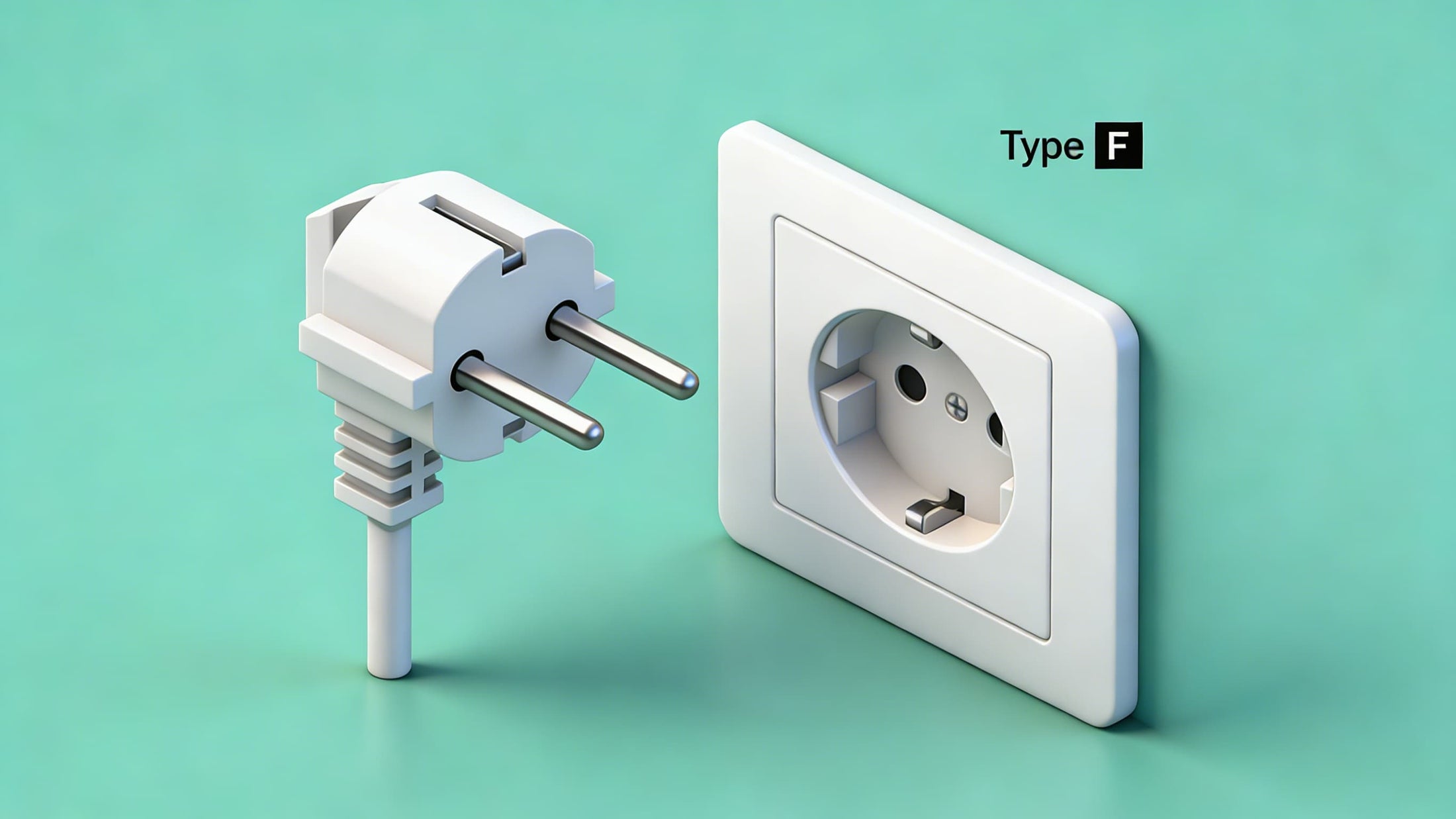
Type F (Schuko) compatibility: Type F plugs can physically fit into Czech Type E sockets in most cases. However, the grounding mechanisms differ — Type F uses side clips while Type E uses a top-mounted pin. For everyday low-power use this works fine, but for high-power devices, proper Type E compatibility is recommended.
Outlet Conditions in Popular Destinations
Prague: Hotels in Prague's historic Old Town often occupy centuries-old buildings. Outlets may be in unusual locations — behind furniture, near the floor, or limited to one per room. Modern hotels and new accommodations have standard Type E outlets in convenient locations.
Český Krumlov: This UNESCO World Heritage town features many medieval buildings converted into guesthouses. Expect fewer outlets and potentially recessed sockets in older properties.
Brno & Karlovy Vary: More modern infrastructure in business hotels, with standard Type E outlets and often USB charging ports in newer establishments.
3. Device Classification + Travel Essentials
Dual Voltage Devices (Adapter Only)

Check your device label:
- If labeled "100-240V" or "110-240V": Plug adapter only — no voltage converter needed
- Common dual-voltage devices: smartphone chargers, laptop power adapters, tablet chargers, camera battery chargers, electric toothbrush bases, USB-C chargers, and most modern portable electronics
Single Voltage Devices (Converter Required)
- If labeled "110V" or "120V" only: A voltage converter is mandatory
- Common single-voltage devices: American hair dryers, curling irons, flat irons, certain older electric shavers, US coffee makers, and some small kitchen appliances
4. Product Selection Guide
How to Choose the Right Voltage Converter
Step 1: Identify Your Device Type
- Dual Voltage Devices (100-240V): Only need a plug adapter, no voltage converter required. Includes: phone chargers, laptops, camera chargers, tablets, etc.
- Single Voltage Devices (110-120V): Must use a voltage converter. Includes: US hair dryers, curling irons, straighteners, some electric toothbrushes, etc.
Step 2: Choose Based on Power Requirements
| Device Type | Typical Power Range | Recommended Converter Rating |
|---|---|---|
| Phones / Laptops / Cameras | 10–100W | 200W+ (adapter only if dual voltage) |
| Curling Irons / Straighteners | 50–200W | 300W+ |
| Hair Dryers | 1000–2000W | 2000W+ |
| CPAP Machines | 40–90W | Pure sine wave model required |
Step 3: Consider Key Features
-
Waveform Type:
- Pure Sine Wave: Essential for CPAP machines, cameras, precision electronics, and any device with sensitive circuitry
- Modified Sine Wave: Acceptable for simple heating tools (mechanical-switch hair dryers, basic curling irons)

- Frequency Conversion: 50Hz to 60Hz conversion matters for precision devices with AC motors
- Surge Protection: Protects your devices from voltage spikes (note: may be prohibited on cruise ships)
- USB Charging Ports: Built-in USB-A and USB-C ports are convenient for charging multiple devices at once
Reliable Brand References
Popular travel converter brands include Anker, Tessan, Epicka, Bestek, and DOACE. We recommend searching "voltage converter for Europe travel" on Amazon and comparing products based on wattage, waveform type, USB port count, and verified user reviews to find the best fit for your trip.
5. Practical Travel Tips for the Czech Republic
Phones / Laptops / Power Banks: A plug adapter is all you need — virtually all modern chargers are dual voltage (100-240V). For power banks, European air transport rules are similar to US regulations: under 100Wh (approx. 27,000mAh at 3.7V) is fine for carry-on; 100-160Wh requires airline approval; over 160Wh is prohibited on flights.
Hair Dryers / Curling Irons: Three practical options: (1) Buy a dual-voltage travel version before your trip, (2) Bring a voltage converter rated for your device's wattage, or (3) Purchase an affordable local-voltage hair dryer at Czech electronics retailers like Datart, Alza.cz, or Electro World — prices are reasonable and it eliminates the converter hassle entirely.
Prepare Before Departure: Order "US to Europe Type E adapter" and a voltage converter (if needed) on Amazon before your trip. Bring at least 2 adapters — one for your hotel room and one to carry daily.
Hotels and Accommodations: Some Prague hotels offer loaner adapters at the front desk, but availability is limited and they often run out during peak tourist season (June–September). Don't count on this — bring your own.
Prague's Historic Buildings: Many hotels and Airbnbs in Prague's center are in renovated historical buildings. Outlets may be recessed, oddly placed, or limited in number. A short extension cord or small power strip can be a lifesaver when you have multiple devices to charge.
Café Culture: Prague's café scene is legendary. Most cafés offer free WiFi and power outlets for customers, but all outlets are Type E — always carry your adapter when heading out for the day.
Prague Airport (PRG): Václav Havel Airport has charging stations throughout terminals, some with USB ports. After clearing customs, you'll find standard Czech Type E outlets at gate seating areas.
Czech Crown (CZK) Note: The Czech Republic is an EU member but does not use the Euro. The local currency is the Czech Crown (CZK). If you need to buy an adapter locally, prices at airport shops run 300-500 CZK (approximately $12-20 USD) — significantly more than online prices.
Check Device Labels: Always verify voltage specs before packing. "100-240V" = adapter only; "120V" = voltage converter required. This 60-second check prevents expensive equipment damage.
Avoid High-Wattage Appliances with Portable Converters: We strongly recommend not using juicers, full-size coffee makers, irons, or garment steamers with travel voltage converters. Their startup surge power can be 3-7 times the rated wattage, easily triggering overload protection or damaging the converter.
6. Frequently Asked Questions (FAQ)
Q1: Can I use my iPhone / MacBook charger in the Czech Republic?
A: Yes. All Apple original chargers support 100-240V input. You only need a plug adapter to convert your US Type A/B plug to Czech Type E — no voltage converter required. The same applies to iPad chargers and Apple Watch chargers.
Q2: Do I need a voltage converter for the Czech Republic?
A: It depends entirely on your devices. Check every label: if it says "100-240V," you only need an adapter. If it says "120V" or "110V," you absolutely need a voltage converter. Most modern portable electronics are dual voltage. Hair dryers, curling irons, and older appliances are usually the ones that need converters.
Q3: Are Czech Republic outlets the same as Slovakia, Austria, and Germany?
A: Very similar but not identical. Czech Republic and Slovakia both use Type E outlets (they shared the same electrical infrastructure as Czechoslovakia until 1993). Austria and Germany primarily use Type F (Schuko). The good news: a CEE 7/7 adapter (compatible with both Type E and Type F) works across all four countries and most of continental Europe.
Q4: Will the 50Hz frequency damage my US electronics?
A: For modern electronics — no. Smartphones, laptops, cameras, and tablets all use switching power supplies that work perfectly with both 50Hz and 60Hz. The only devices potentially affected are those with AC synchronous motors (certain analog clocks, vintage turntables), which may run about 17% slower at 50Hz. This is rarely relevant for travelers.
Q5: Can I buy a plug adapter at Prague Airport?
A: Yes, several shops in both terminals sell travel adapters. However, prices are typically 2-3x what you'd pay on Amazon, and selection may be limited. Buying one before your trip is always the smarter choice.
Q6: What about using a Dyson hair dryer with a voltage converter?
A: Not recommended. Dyson hair dryers contain sophisticated digital motors and electronic control chips that are sensitive to waveform quality. Most travel converters produce modified sine waves that Dyson devices detect as faults, triggering automatic shutdowns. Even pure sine wave converters aren't guaranteed to work properly. Dyson officially advises against using their US-market products overseas with converters. Your best options: buy a dual-voltage travel hair dryer, or purchase a local-voltage dryer at your destination.
Q7: I'm visiting both Czech Republic and Slovakia on the same trip. Do I need different adapters?
A: No. Both countries use 230V/50Hz with Type E outlets — identical electrical standards inherited from their time as Czechoslovakia. One set of adapters works for both countries.
7. Quick Reference Summary
| Item | Details |
|---|---|
| Czech Republic Voltage | 230V |
| Czech Republic Frequency | 50Hz |
| Czech Republic Outlet Type | Type E (compatible with Type C plugs) |
| US Voltage | 120V |
| US Plug Type | Type A / Type B |
| Plug Adapter Needed? | ✅ Yes — always required |
| Voltage Converter Needed? | ⚠️ Only for 120V-only devices |
| Currency | Czech Crown (CZK), not Euro |


