

1. Voltage and Frequency
Switzerland Standard: 230V voltage, 50Hz frequency.
US Standard: 120V voltage, 60Hz frequency.
Key Differences:
- Swiss voltage is nearly double the US (230V vs 120V) — plugging a 120V-only device into a Swiss outlet will instantly damage it
- Different frequency (50Hz vs 60Hz): Modern switched-mode power supplies handle both frequencies without issue
- Unique Swiss outlets: Switzerland uses Type J — a proprietary standard found only in Switzerland and Liechtenstein. Standard European Type E/F (Schuko) plugs do NOT fit Swiss outlets
Risk Warning: Connecting 120V-only US appliances directly into Swiss 230V outlets will cause immediate device failure, potentially with sparks, smoke, or fire.
2. Local Outlet Types
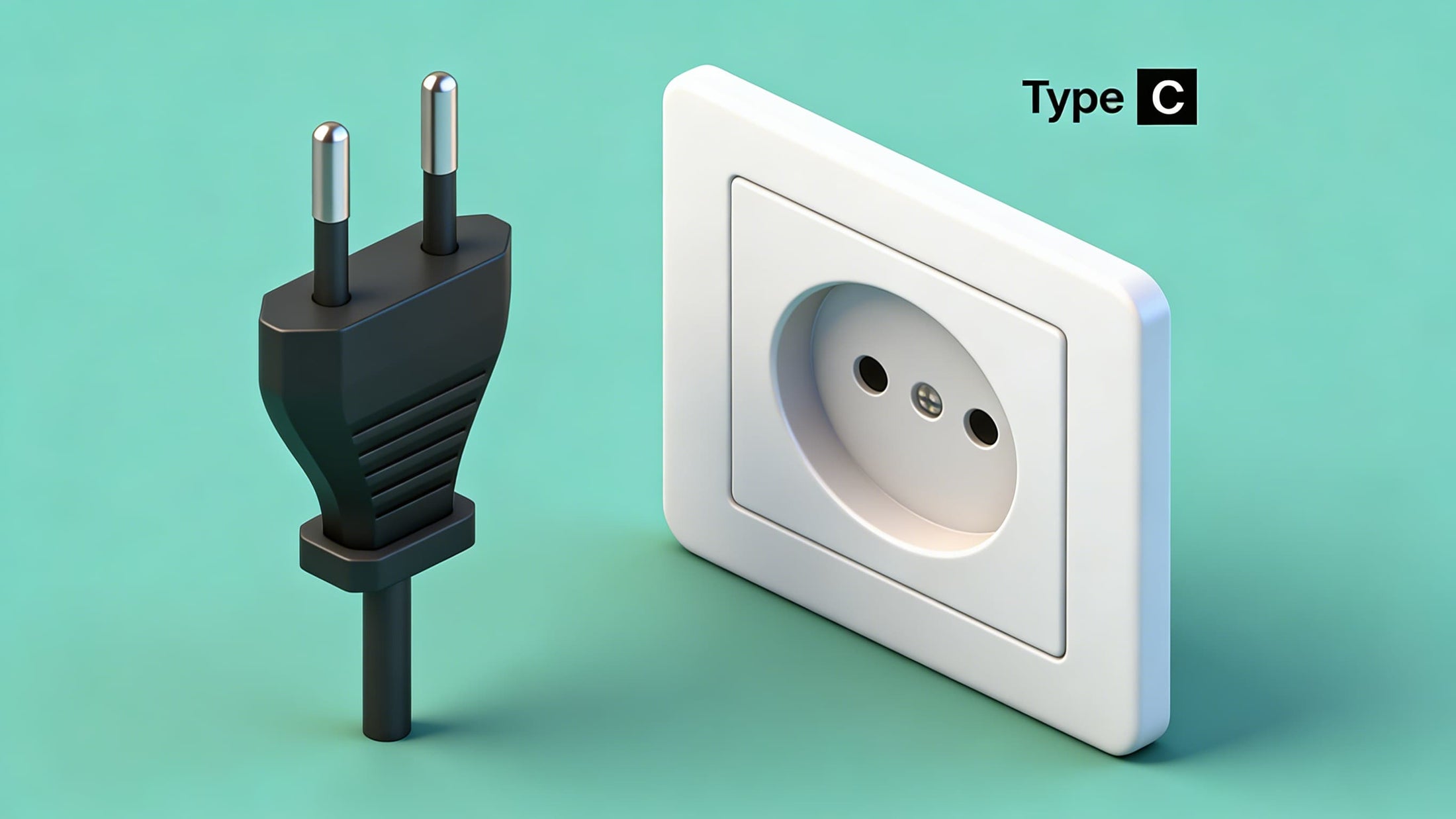
Switzerland uses its unique Type J outlet as the national standard. Type C (Europlug) plugs are compatible, but Type E/F (Schuko) plugs do NOT fit.
Type J outlets feature three round holes arranged in a triangular pattern — two parallel pins for live and neutral, plus one offset grounding pin. This compact design is unique to Switzerland and Liechtenstein. The recessed socket opening is smaller than Type F (Schuko), so standard European Schuko plugs physically cannot be inserted.

Type C plugs (Europlug) have two round 4mm pins spaced 19mm apart with no grounding connection. They fit into Swiss Type J sockets and are commonly found on low-power devices like phone chargers and small electronics.
Outlet Conditions in Popular Destinations
Zurich: As a global financial center, Zurich hotels are generally modern and well-equipped with standard Type J outlets. Some international chain hotels offer universal outlets or loaner adapters at the front desk.
Geneva: Home to the UN European headquarters and many international organizations. Despite its cosmopolitan nature, all outlets are Swiss Type J. Note: Geneva borders France, where Type E outlets are used — bring the right adapter for each country if you plan cross-border day trips.
Lucerne, Interlaken & Zermatt: Tourist-oriented towns with excellent hotel infrastructure. All use standard Type J outlets. Mountain lodges and chalets also use Type J exclusively.
3. Device Classification + Travel Essentials
Dual Voltage Devices (Adapter Only)

Check your device label:
- If labeled "100-240V" or "110-240V": Plug adapter only (US to Swiss Type J) — no voltage converter needed
- Common dual-voltage devices: smartphone chargers, laptop power adapters, tablet chargers, camera battery chargers, electric toothbrush bases, USB-C chargers, and most modern portable electronics
Single Voltage Devices (Converter Required)
- If labeled "110V" or "120V" only: A voltage converter is mandatory
- Common single-voltage devices: American hair dryers, curling irons, flat irons, certain older electric shavers, US coffee makers
- Curling iron warning: Digitally-controlled curling irons and flat irons are precision electronic heating devices — cheap electronic converters with non-pure sine wave output will damage temperature control chips. Buy a dual-voltage version or purchase locally at Interdiscount.
4. Product Selection Guide
How to Choose the Right Voltage Converter
Step 1: Identify Your Device Type
- Dual Voltage (100-240V): Only need a plug adapter. Includes: phone chargers, laptops, cameras, tablets.
- Single Voltage (110-120V): Must use a voltage converter. Includes: US hair dryers, curling irons, straighteners.
Step 2: Choose Based on Power Requirements
| Device Type | Typical Power Range | Recommended Converter Rating |
|---|---|---|
| Phones / Laptops / Cameras | 10–100W | 200W+ (adapter only if dual voltage) |
| Curling Irons / Straighteners | 50–200W | 300W+ |
| Hair Dryers | 1000–2000W | 2000W+ |
| CPAP Machines | 40–90W | Pure sine wave model required |
Step 3: Consider Key Features
-
Waveform Type:
- Pure Sine Wave: Essential for CPAP machines, cameras, precision electronics
- Modified Sine Wave: Acceptable for simple heating tools

- Surge Protection: Protects your devices from voltage spikes
- USB Charging Ports: Built-in USB-A and USB-C ports for convenience
- Swiss Type J Output: Some converters come with interchangeable plug heads — make sure Swiss Type J is included
Reliable Brand References
Popular travel converter brands include Anker, Tessan, Epicka, Bestek, and DOACE. When shopping, verify the product explicitly supports Swiss Type J outlets. Compare on Amazon by wattage, waveform type, USB port count, and user reviews.
5. Practical Travel Tips for Switzerland
Phones / Laptops / Power Banks: A Type J plug adapter is all you need — virtually all modern chargers are dual voltage (100-240V).
Hair Dryers / Curling Irons: Three options: (1) Buy a dual-voltage travel version, (2) Bring a voltage converter with Type J support, or (3) Purchase a local hair dryer at Interdiscount, Digitec, or Coop/Migros supermarkets — CHF 25-50 ($28-55). Swiss prices are high but it eliminates converter hassles. For premium curling irons, buy a dual-voltage version rather than risking converter damage.
Adapter Warning: Standard "European" adapters (Type E/F) do NOT work in Switzerland. You must have a Swiss Type J adapter. Verify before departure.
SBB Trains: Swiss Federal Railways long-distance and scenic trains (Glacier Express, Bernina Express, GoldenPass) have power outlets at most seats — all Type J format. Regional trains and S-Bahn services may only have USB ports without full-size outlets. Bring your Type J adapter on the train.
Zurich Airport (ZRH): World-class facilities with abundant charging stations and USB ports throughout terminals.
Geneva Border Crossings: Geneva borders France. If taking day trips to French towns (Annecy, Chamonix), note that France uses Type E outlets — different from Swiss Type J. Bring the right adapter for each country.
Swiss Franc (CHF) Note: Switzerland does not use the Euro. The local currency is the Swiss Franc (CHF). As of 2026, 1 USD ≈ 0.88-0.92 CHF. Switzerland is one of the world's most expensive countries — adapters at airport shops run CHF 20-35 ($22-40). Buy on Amazon beforehand to save money.
Multi-Country Trips: If combining Switzerland with Germany, Austria, France, or Italy, you need multiple adapter types. A universal travel adapter that covers Type J, Type E, and Type F is the most practical solution.
6. Frequently Asked Questions (FAQ)
Q1: Will my "European universal" adapter work in Switzerland?
A: It depends. If it outputs Type C (Europlug — two thin round pins), yes. If it outputs Type F (Schuko — with side grounding clips) or Type E (with grounding hole), it physically won't fit Swiss Type J sockets. Always verify your adapter explicitly supports "Swiss Type J."
Q2: Can I use my iPhone / MacBook charger in Switzerland?
A: Yes. All Apple chargers support 100-240V input. You only need a Type J plug adapter. Apple also sells Swiss-specific plug heads for their chargers.
Q3: Do I need a voltage converter for Switzerland?
A: It depends on your devices. "100-240V" label means adapter only; "120V" means converter required. Most modern portable electronics are dual voltage.
Q4: Are Swiss outlets the same as Liechtenstein?
A: Yes, identical. Both use 230V/50Hz with Type J outlets. The same adapter works for both countries.
Q5: Do I need a different adapter when crossing from Switzerland to Germany/Austria/France?
A: Yes. Germany and Austria use Type F (Schuko), France uses Type E. These are NOT compatible with Swiss Type J. If your trip spans multiple countries, bring a universal adapter or separate adapters for each standard.
Q6: Does Switzerland use the Euro?
A: No. Switzerland uses the Swiss Franc (CHF). Some tourist establishments accept Euros, but change is given in CHF. Credit cards are widely accepted. As of 2026, 1 USD ≈ 0.88-0.92 CHF.
Q7: Can I buy a plug adapter at Zurich Airport?
A: Yes, but at Swiss premium prices (CHF 15-30 / $17-34). Buying on Amazon before your trip saves significant money.
7. Quick Reference Summary
| Item | Details |
|---|---|
| Switzerland Voltage | 230V |
| Switzerland Frequency | 50Hz |
| Switzerland Outlet Type | Type J (compatible with Type C; NOT compatible with Type E/F) |
| US Voltage | 120V |
| US Plug Type | Type A / Type B |
| Plug Adapter Needed? | ✅ Yes — must be Swiss Type J compatible |
| Voltage Converter Needed? | ⚠️ Only for 120V-only devices |
| Currency | Swiss Franc (CHF), not Euro |
| EU Member? | No (Schengen member) |


