

1. Voltage and Frequency
Finland Standard: 230V voltage, 50Hz frequency. Actual voltage typically ranges between 220-240V, and Finland's power grid is exceptionally stable.
US Standard: 120V voltage, 60Hz frequency.
As an EU member state and eurozone country, Finland follows unified European electrical standards. For American travelers, this means a completely different electrical environment:
| Parameter | United States | Finland |
|---|---|---|
| Voltage | 120V | 230V |
| Frequency | 60Hz | 50Hz |
| Plug Type | Type A / Type B | Type C / Type F |
Key Differences:
- Finnish voltage is nearly double the US (230V vs 120V) — plugging a 120V-only device into a Finnish outlet will instantly damage it
- Different frequency (50Hz vs 60Hz): Modern switched-mode power supplies handle both frequencies without issue, but devices with AC motors may run approximately 17% slower
- Completely incompatible plugs: US uses Type A/B (flat blades), Finland uses Type F/Schuko (round pins with side grounding clips)
Risk Warning: Connecting 120V-only US appliances (hair dryers, curling irons, some kitchen appliances) directly into Finnish 230V outlets will cause immediate device failure, potentially with sparks, smoke, or fire.
2. Local Outlet Types
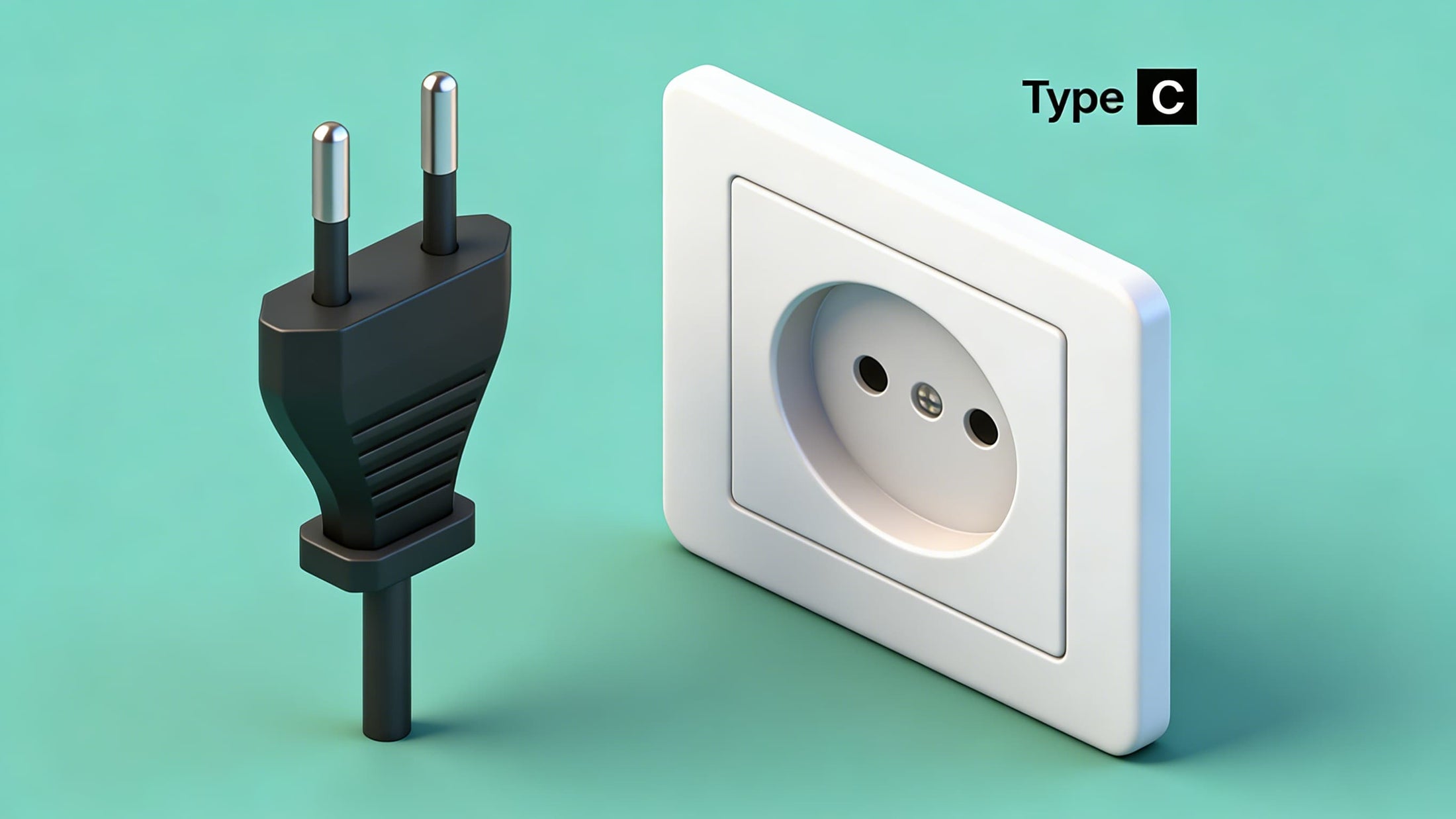
Finland primarily uses Type F (Schuko) as its standard wall outlet, and is widely compatible with Type C (Europlug) plugs.
Type F (Schuko) outlets feature two round holes for the plug pins and two grounding clips on the sides of the recessed socket. When you insert a compatible plug, these clips make contact with grounding strips on the plug body, providing earth protection. Type F is the standard across Finland, Germany, Austria, the Netherlands, Spain, and the Nordic countries.
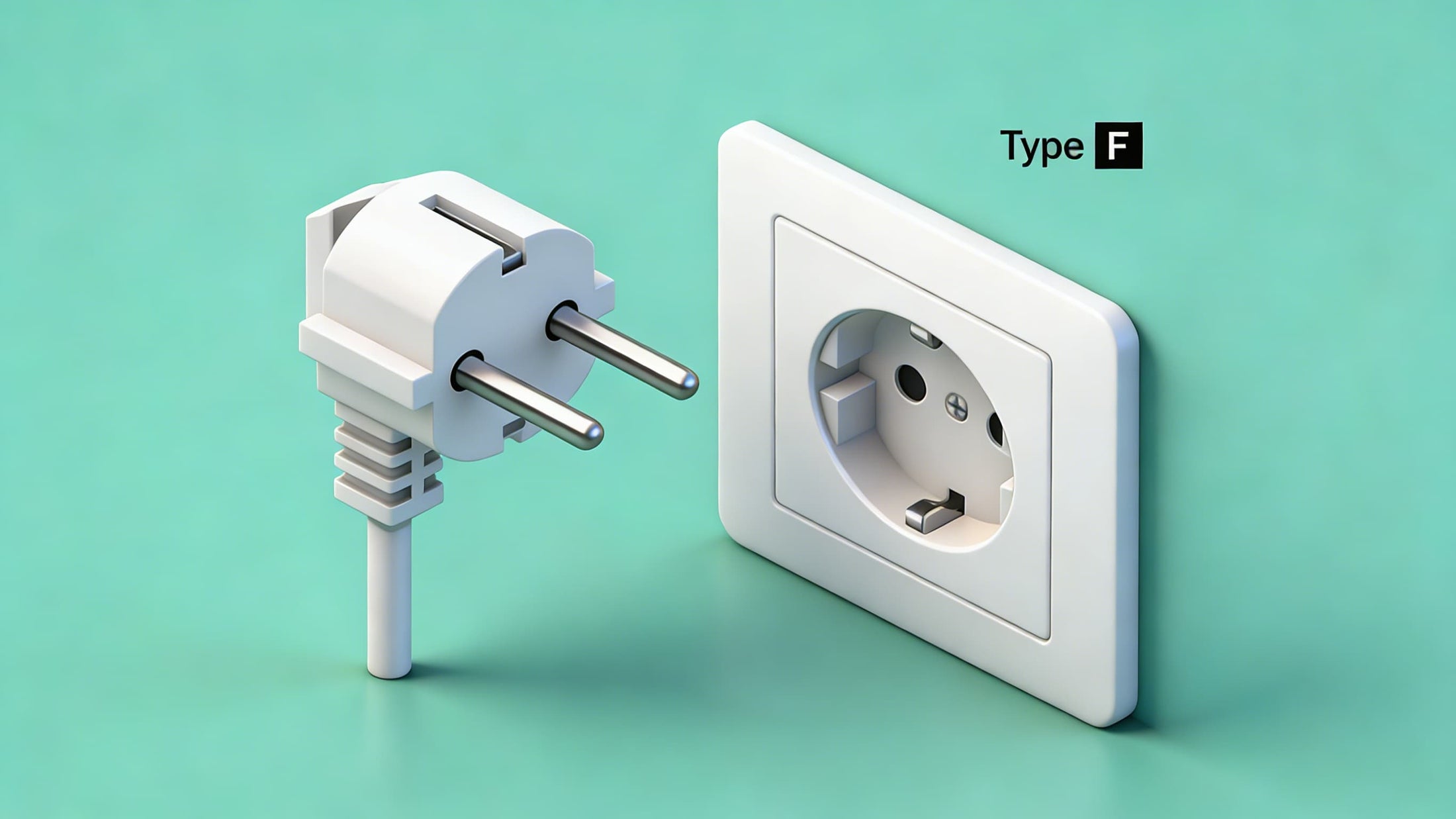
Type C plugs (Europlug) have two round 4mm pins spaced 19mm apart with no grounding connection. They fit into Type F sockets and are commonly found on low-power devices like phone chargers, laptop chargers, and small electronics throughout Europe.
Outlet Conditions in Popular Destinations
Helsinki: Hotels and Airbnbs in the capital have modern electrical infrastructure with standard Type F outlets. Some international chain hotels offer universal outlets or loaner adapters at the front desk.
Turku: Finland's oldest city has a mix of historic and modern accommodations, all using standard Type F outlets.
Tampere: Known as the "Sauna Capital of the World," hotels here have standard modern outlets. Lakeside cabins may have fewer outlets.
Rovaniemi & Lapland: Santa Claus Village and Northern Lights destinations have good hotel infrastructure. However, remote wilderness cabins (mökki) may have very limited outlets, and some extremely remote cabins may run on solar or generators — confirm before booking.
3. Device Classification + Travel Essentials
Dual Voltage Devices (Adapter Only)

Check your device label:
- If labeled "100-240V" or "110-240V": Plug adapter only — no voltage converter needed
- Common dual-voltage devices: smartphone chargers, laptop power adapters, tablet chargers, camera battery chargers (essential for capturing the Northern Lights), electric toothbrush bases, USB-C chargers, and most modern portable electronics
Single Voltage Devices (Converter Required)
- If labeled "110V" or "120V" only: A voltage converter is mandatory
- Common single-voltage devices: American hair dryers, curling irons, flat irons, certain older electric shavers, US coffee makers
- Curling iron warning: Digitally-controlled curling irons and flat irons are precision electronic heating devices — cheap electronic converters with non-pure sine wave output will damage temperature control chips. Buy a dual-voltage version or purchase a European model locally at Verkkokauppa.com.
4. Product Selection Guide
How to Choose the Right Voltage Converter
Step 1: Identify Your Device Type
- Dual Voltage Devices (100-240V): Only need a plug adapter, no voltage converter required. Includes: phone chargers, laptops, camera chargers, tablets, etc.
- Single Voltage Devices (110-120V): Must use a voltage converter. Includes: US hair dryers, curling irons, straighteners, some electric toothbrushes, etc.
Step 2: Choose Based on Power Requirements
| Device Type | Typical Power Range | Recommended Converter Rating |
|---|---|---|
| Phones / Laptops / Cameras | 10–100W | 200W+ (adapter only if dual voltage) |
| Curling Irons / Straighteners | 50–200W | 300W+ |
| Hair Dryers | 1000–2000W | 2000W+ |
| CPAP Machines | 40–90W | Pure sine wave model required |
Step 3: Consider Key Features
-
Waveform Type:
- Pure Sine Wave: Essential for CPAP machines, cameras, precision electronics, and any device with sensitive circuitry
- Modified Sine Wave: Acceptable for simple heating tools (mechanical-switch hair dryers, basic curling irons)

- Surge Protection: Protects your devices from voltage spikes
- USB Charging Ports: Built-in USB-A and USB-C ports are convenient for charging multiple devices at once
Reliable Brand References
Popular travel converter brands include Anker, Tessan, Epicka, Bestek, and DOACE. We recommend searching "voltage converter for Europe travel" on Amazon and comparing products based on wattage, waveform type, USB port count, and verified user reviews to find the best fit for your trip.
5. Practical Travel Tips for Finland
Phones / Laptops / Power Banks: A plug adapter is all you need — virtually all modern chargers are dual voltage (100-240V). For power banks, European air transport rules are similar to US regulations: under 100Wh (approx. 27,000mAh at 3.7V) is fine for carry-on; 100-160Wh requires airline approval; over 160Wh is prohibited on flights.
Hair Dryers / Curling Irons: Three practical options: (1) Buy a dual-voltage travel version before your trip, (2) Bring a voltage converter rated for your device's wattage, or (3) Purchase a local-voltage hair dryer at Helsinki's Verkkokauppa.com electronics store or Prisma/K-Citymarket supermarkets — about €15-30. Finland uses the Euro, making shopping convenient. For premium curling irons, buy a dual-voltage version rather than risking converter damage.
Sauna Culture: Finland has approximately 3.3 million saunas for a population of just 5.5 million. Hotel sauna areas typically have changing room outlets, but they're limited and in a high-humidity environment. Never bring electronic devices into the sauna itself — temperatures of 80-100°C and extreme humidity will instantly destroy any electronics. Charge your devices fully before heading to the sauna.
Lapland Northern Lights Hunting: Finnish Lapland is one of the world's premier Northern Lights viewing locations. Winter temperatures can drop to -20°C or lower, which severely reduces lithium battery life. Your phone battery may plummet within 30 minutes outdoors. Keep your phone and power bank close to your body for warmth, and bring at least 2 spare camera batteries.
Glass Igloo Accommodations: Lapland's famous glass igloo hotels (like Kakslauttanen and Arctic TreeHouse) are hugely popular. These compact cabins typically have limited outlets (usually 2-4), often occupied by bedside lamps and other fixtures. Bring a small power strip.
VR Trains (Finnish Railways): Finland's VR trains are equipped with Type F outlets and USB charging ports, especially on the overnight train from Helsinki to Rovaniemi. Long train journeys are a great time to charge up — bring your adapter.
Helsinki's Café Scene: Finland leads the world in per-capita coffee consumption, and Helsinki's cafés nearly all offer free WiFi and charging outlets. But they're all Type F, so always carry your adapter.
Helsinki-Vantaa International Airport (HEL): Modern facilities with abundant charging stations and USB ports. The airport is just a 30-minute train ride from downtown Helsinki.
Euro (€) Note: Finland is a eurozone country using the Euro (€), making currency exchange convenient for US travelers. Current exchange rate is approximately 1 USD ≈ 0.86-0.88 EUR (check a banking app or XE before departure for the latest rate). Credit cards and mobile payments (Apple Pay, etc.) are widely accepted throughout Finland — you can go nearly cashless.
6. Frequently Asked Questions (FAQ)
Q1: Can I use my iPhone / MacBook charger in Finland?
A: Yes. All Apple original chargers support 100-240V input. You only need a plug adapter to convert your US Type A/B plug to Finnish Type F — no voltage converter required. The same applies to iPad chargers and Apple Watch chargers.
Q2: Do I need a voltage converter for Finland?
A: It depends entirely on your devices. Check every label: if it says "100-240V," you only need an adapter. If it says "120V" or "110V," you absolutely need a voltage converter. Most modern portable electronics are dual voltage. Hair dryers, curling irons, and older appliances are usually the ones that need converters.
Q3: Are Finnish outlets the same as other Nordic countries?
A: Finland shares the 230V/50Hz standard with Sweden, Norway, and Iceland, all using Type F (Schuko) outlets — the same adapter set works across all four countries. Denmark primarily uses Type K outlets (a Danish-specific standard), but most modern Danish outlets also accept Type C and Type F plugs. If your Nordic itinerary includes Denmark, confirm your adapter is compatible with Type K.
Q4: Will the 50Hz frequency damage my US electronics?
A: For modern electronics — no. Smartphones, laptops, cameras, and tablets all use switching power supplies that work perfectly with both 50Hz and 60Hz. The only devices potentially affected are those with AC synchronous motors (certain analog clocks, vintage turntables), which may run about 17% slower at 50Hz. This is rarely relevant for travelers.
Q5: Can I buy a plug adapter at Helsinki Airport?
A: Yes, airport shops carry travel adapters for about €5-15. Finland uses the Euro, so prices are relatively reasonable. However, buying a CE-certified adapter on Amazon before your trip gives you better selection and pricing.
Q6: Does Finland use the Euro?
A: Yes. Finland is a eurozone country using the Euro (EUR/€). Current exchange rate is approximately 1 USD ≈ 0.86-0.88 EUR (check a banking app or XE before departure). Credit cards and mobile payments are widely accepted throughout Finland — you can go nearly cashless.
7. Quick Reference Summary
| Item | Details |
|---|---|
| Finland Voltage | 230V |
| Finland Frequency | 50Hz |
| Finland Outlet Type | Type F / Schuko (compatible with Type C plugs) |
| US Voltage | 120V |
| US Plug Type | Type A / Type B |
| Plug Adapter Needed? | ✅ Yes — always required |
| Voltage Converter Needed? | ⚠️ Only for 120V-only devices |
| Currency | Euro (EUR/€) |
The bottom line: When traveling to Finland, a plug adapter is a must-have, and a voltage converter depends on your devices. By 2026, the vast majority of modern phones, laptops, earbuds, and cameras support 100-240V wide voltage. Finland runs on 230V/50Hz. A GaN multi-port USB-C PD charger paired with one adapter handles virtually all portable devices. Finland uses the Euro, making shopping convenient. Pay special attention to winter cold's impact on battery life — bring spare batteries and a power bank for Lapland adventures, and never bring electronics into the sauna.


