

1. Voltage and Frequency
Sweden Standard: 230V voltage, 50Hz frequency. Actual voltage typically ranges between 220-240V, and Sweden's power grid is exceptionally stable.
US Standard: 120V voltage, 60Hz frequency.
Sweden is an EU member state and follows unified European electrical standards. However, despite being in the EU, Sweden does not use the Euro — it retains its own currency, the Swedish Krona (SEK). For American travelers, the electrical environment is completely different from home:
| Parameter | United States | Sweden |
|---|---|---|
| Voltage | 120V | 230V |
| Frequency | 60Hz | 50Hz |
| Plug Type | Type A / Type B | Type C / Type F |
Key Differences:
- Swedish voltage is nearly double the US (230V vs 120V) — plugging a 120V-only device into a Swedish outlet will instantly damage it
- Different frequency (50Hz vs 60Hz): Modern switched-mode power supplies handle both without issue
- Completely incompatible plugs: US uses Type A/B (flat blades), Sweden uses Type F/Schuko (round pins with side grounding clips)
Risk Warning: Connecting 120V-only US appliances directly into Swedish 230V outlets will cause immediate device failure, potentially with sparks, smoke, or fire.
2. Local Outlet Types
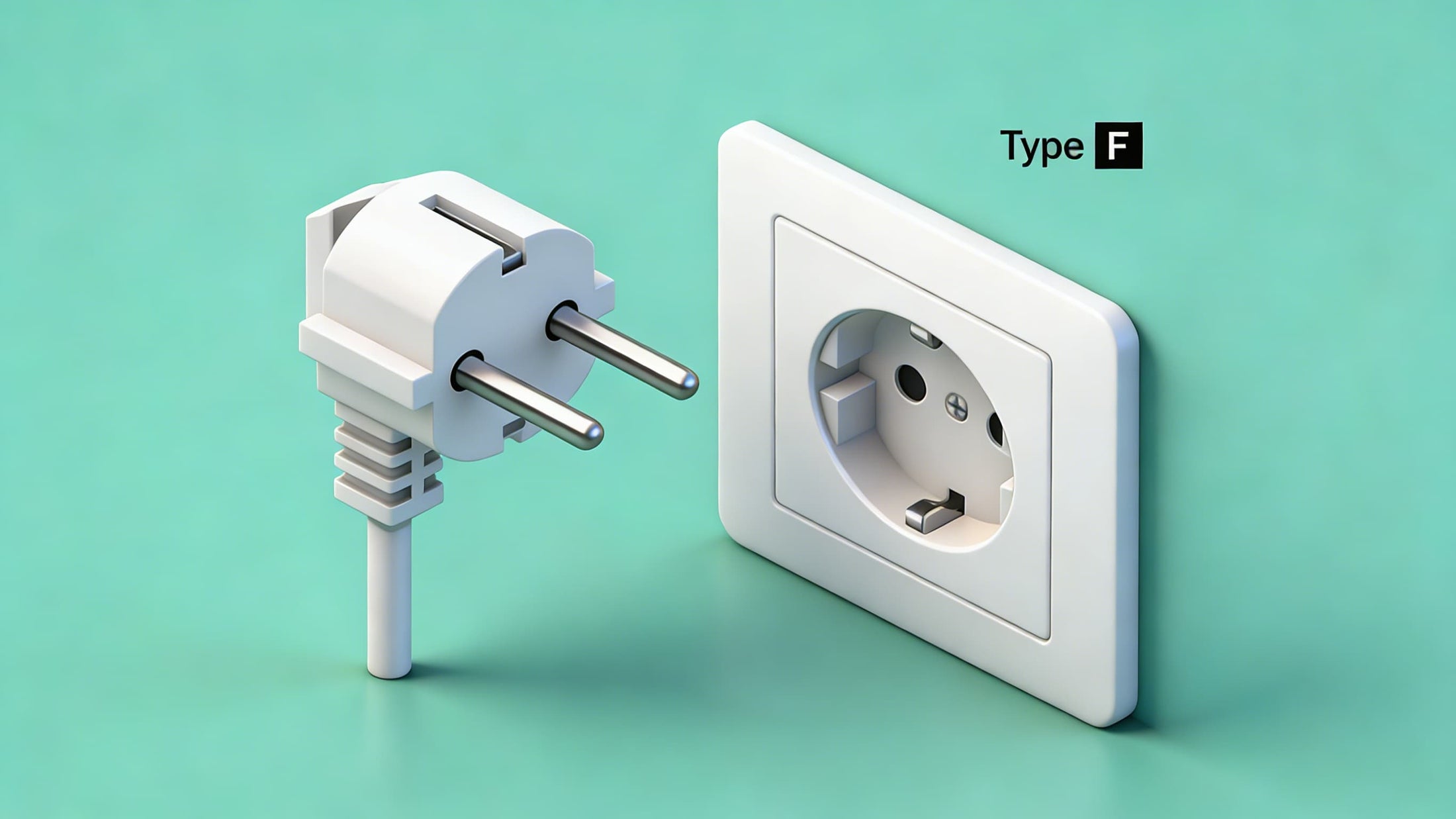
Sweden primarily uses Type F (Schuko) as its standard wall outlet, and is widely compatible with Type C (Europlug) plugs.
Type F (Schuko) outlets feature two round holes and two grounding clips on the sides. Type F is standard across Sweden, Germany, Austria, the Netherlands, Spain, and the Nordic countries.
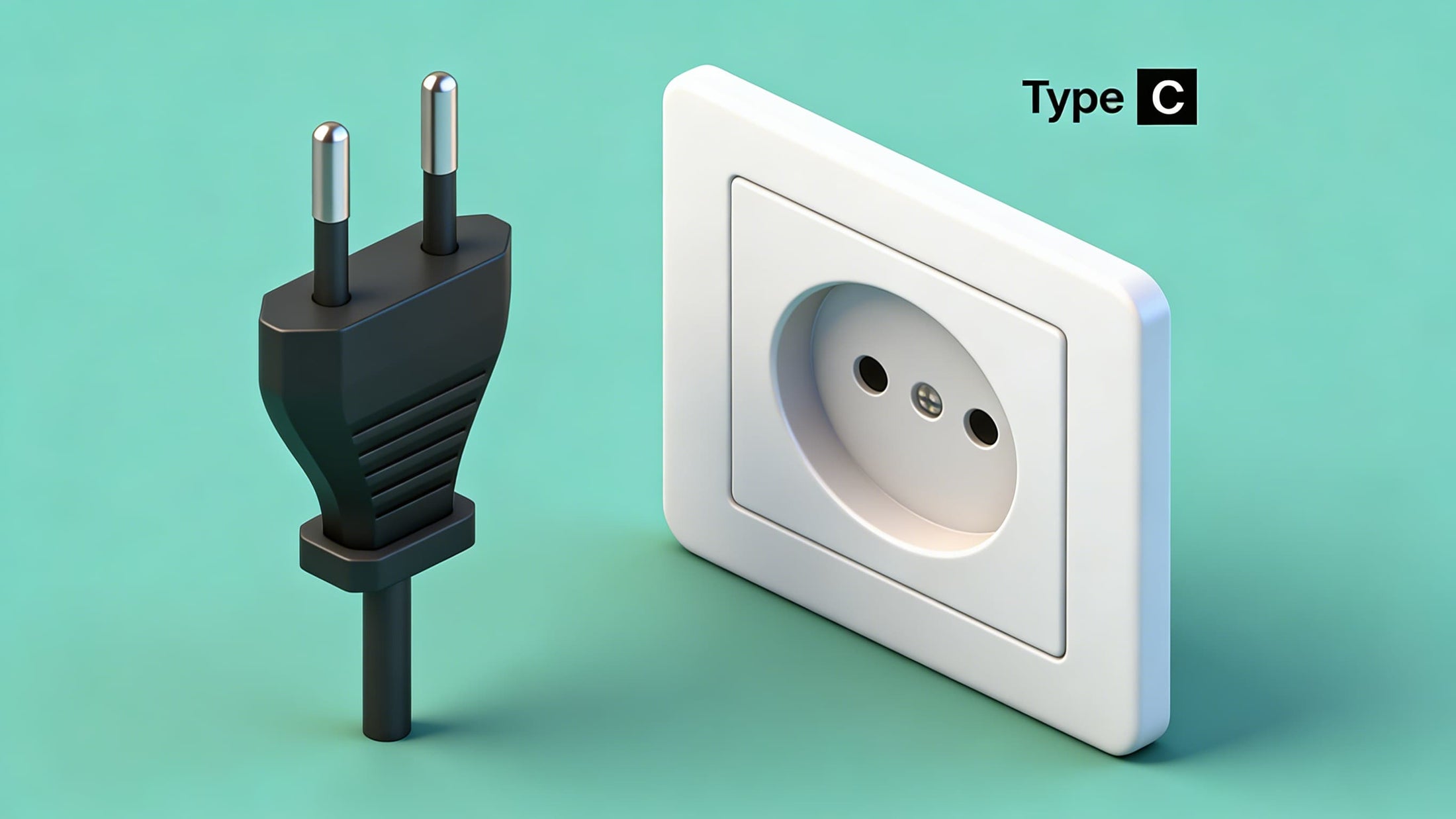
Type C plugs (Europlug) have two round 4mm pins spaced 19mm apart with no grounding connection. They fit into Type F sockets and are commonly found on low-power devices.
Outlet Conditions in Popular Destinations
Stockholm: Hotels and Airbnbs have modern Type F outlets. International chain hotels may offer universal outlets or loaner adapters.
Gothenburg: Sweden's second city has modern infrastructure with standard Type F outlets throughout.
Malmö: Connected to Copenhagen via the Öresund Bridge. Standard modern outlets in all accommodations.
Kiruna & Swedish Lapland: The Icehotel's ice rooms have no outlets (they're made of ice!). Warm areas and warm rooms have standard Type F outlets. Remote cabins may have limited outlets.
3. Device Classification + Travel Essentials
Dual Voltage Devices (Adapter Only)

Check your device label:
- If labeled "100-240V" or "110-240V": Plug adapter only — no voltage converter needed
- Common dual-voltage devices: smartphone chargers, laptop power adapters, tablet chargers, camera battery chargers, electric toothbrush bases, USB-C chargers, and most modern portable electronics
Single Voltage Devices (Converter Required)
- If labeled "110V" or "120V" only: A voltage converter is mandatory
- Common single-voltage devices: American hair dryers, curling irons, flat irons, certain older electric shavers, US coffee makers
- Curling iron warning: Digitally-controlled curling irons and flat irons are precision electronic heating devices — cheap electronic converters with non-pure sine wave output will damage temperature control chips. Buy a dual-voltage version instead.
4. Product Selection Guide
How to Choose the Right Voltage Converter
Step 1: Identify Your Device Type
- Dual Voltage (100-240V): Only need a plug adapter. Includes: phone chargers, laptops, camera chargers, tablets, etc.
- Single Voltage (110-120V): Must use a voltage converter. Includes: US hair dryers, curling irons, straighteners, etc.
Step 2: Choose Based on Power Requirements
| Device Type | Typical Power Range | Recommended Converter Rating |
|---|---|---|
| Phones / Laptops / Cameras | 10–100W | 200W+ (adapter only if dual voltage) |
| Curling Irons / Straighteners | 50–200W | 300W+ |
| Hair Dryers | 1000–2000W | 2000W+ |
| CPAP Machines | 40–90W | Pure sine wave model required |
Step 3: Consider Key Features
-
Waveform Type:
- Pure Sine Wave: Essential for CPAP machines, cameras, precision electronics
- Modified Sine Wave: Acceptable for simple heating tools

- Surge Protection: Protects devices from voltage spikes
- USB Charging Ports: Built-in USB-A and USB-C ports for multi-device charging
Reliable Brand References
Popular travel converter brands include Anker, Tessan, Epicka, Bestek, and DOACE. Search "voltage converter for Europe travel" on Amazon and compare products based on wattage, waveform type, USB port count, and verified reviews.
5. Practical Travel Tips for Sweden
Phones / Laptops / Power Banks: A plug adapter is all you need — virtually all modern chargers are dual voltage (100-240V). For power banks, European air transport rules are similar to US: under 100Wh is fine for carry-on; 100-160Wh requires airline approval; over 160Wh is prohibited.
Hair Dryers / Curling Irons: Three options: (1) Buy a dual-voltage travel version, (2) Bring a voltage converter, or (3) Purchase locally at Stockholm's Elgiganten or MediaMarkt, or ICA/Coop supermarkets — about 150-400 SEK ($15-40). Dual-voltage hair dryers are easily found at Elgiganten — many travelers buy locally to save luggage weight. For premium curling irons, buy a dual-voltage version.
Sweden Is a Cashless Society Pioneer (Critically Important): Sweden is one of the world's most cashless countries. Most shops, restaurants, and even street vendors only accept cards or mobile payments (Swish is Sweden's national payment app, but tourists can't register — credit cards work fine). Phone dead = stranded — you may not be able to buy coffee, purchase metro tickets, or enter certain stores. Always keep your phone charged; carry a high-capacity power bank (20,000mAh+).
Stockholm Metro (Tunnelbana): Stockholm's metro is called "the world's longest art gallery," but in-station charging facilities are limited. Trains don't have USB ports. Charge up before heading underground, or top off at cafés above ground.
SJ Trains (Swedish Railways): Sweden's SJ high-speed and regional trains have Type F outlets and USB charging ports. Popular routes like Stockholm-Gothenburg and Stockholm-Malmö have very modern facilities. Long train rides are perfect for charging — bring your adapter.
Icehotel (Kiruna): The world-famous Icehotel offers a unique experience. Ice rooms have no electrical outlets (the entire room is made of ice!), but the hotel's warm areas have charging facilities. If staying in an ice room, charge all devices fully before check-in.
Swedish Lapland Northern Lights: Northern Sweden (Abisko, Kiruna) offers excellent aurora viewing. Winter temperatures can reach -20°C or lower, severely reducing battery life. Keep devices close to your body; bring at least 2 spare camera batteries.
Fika Culture: Swedes take "fika" (coffee and pastries) at least twice daily. Cafés are everywhere and nearly all offer free WiFi and Type F charging outlets. Always carry your adapter.
Stockholm Arlanda Airport (ARN): Modern facilities with abundant charging stations and USB ports. The Arlanda Express to downtown takes just 20 minutes.
Swedish Krona (SEK) Note: Sweden does not use the Euro despite being an EU member. The local currency is the Swedish Krona (SEK). Current exchange rate is approximately 1 USD ≈ 9.7-10.1 SEK (check a banking app or XE before departure for the latest rate). Credit card acceptance is extremely high — Sweden is one of the world's most cashless societies. If you forget your adapter, buying one locally costs 100-250 SEK ($9-23). Buy on Amazon before departure for better pricing. Carry a no-foreign-transaction-fee credit card.
6. Frequently Asked Questions (FAQ)
Q1: Can I use my iPhone / MacBook charger in Sweden?
A: Yes. All Apple original chargers support 100-240V input. You only need a plug adapter — no voltage converter required.
Q2: Do I need a voltage converter for Sweden?
A: It depends on your devices. Check every label: if "100-240V," adapter only. If "120V" or "110V," voltage converter required. Most modern portable electronics are dual voltage. Hair dryers, curling irons, and older appliances usually need converters.
Q3: Are Swedish outlets the same as other Nordic countries?
A: Sweden shares 230V/50Hz and Type F (Schuko) with Norway, Finland, and Iceland — same adapter works everywhere. Denmark primarily uses Type K (Danish-specific), but most modern Danish outlets also accept Type C/F.
Q4: Will the 50Hz frequency damage my US electronics?
A: For modern electronics — no. Smartphones, laptops, cameras all use switching power supplies compatible with both 50Hz and 60Hz.
Q5: Can I buy a plug adapter at Stockholm Arlanda Airport?
A: Yes, airport shops carry them for about 100-250 SEK ($9-23). Buying on Amazon before your trip is always the better deal.
Q6: Does Sweden use the Euro?
A: No. Despite being an EU member, Sweden uses the Swedish Krona (SEK). Current exchange rate is approximately 1 USD ≈ 9.7-10.1 SEK (check a banking app or XE before departure). Sweden is one of the world's most cashless societies — credit cards and mobile payments accepted nearly everywhere.
7. Quick Reference Summary
| Item | Details |
|---|---|
| Sweden Voltage | 230V |
| Sweden Frequency | 50Hz |
| Sweden Outlet Type | Type F / Schuko (compatible with Type C plugs) |
| US Voltage | 120V |
| US Plug Type | Type A / Type B |
| Plug Adapter Needed? | ✅ Yes — always required |
| Voltage Converter Needed? | ⚠️ Only for 120V-only devices |
| Currency | Swedish Krona (SEK), not Euro |
The bottom line: When traveling to Sweden, a plug adapter is a must-have, and a voltage converter depends on your devices. By 2026, most modern electronics support 100-240V wide voltage. Sweden runs on 230V/50Hz. A GaN multi-port USB-C PD charger paired with one adapter handles virtually all portable devices. Sweden uses the Krona (SEK), not the Euro, but is nearly fully cashless. Critical note: Sweden is a cashless society pioneer — your phone dying could leave you unable to pay for anything. Keep your phone charged at all times.


