

Luxembourg, a small landlocked country in Western Europe surrounded by Belgium, France, and Germany, shares electrical standards with its neighbors. This practical guide is tailored for American travelers, focusing on the key differences from US standards (120V/60Hz, Type A/Type B plugs) to help you avoid device damage or charging failures.
1. Voltage and Frequency (Key Differences)
Luxembourg Standard: 230V voltage, 50Hz frequency.
US Standard: 120V voltage, 60Hz frequency.
Key Differences:
- Luxembourg voltage is nearly double the US (230V vs 120V)
- Different frequency (50Hz vs 60Hz), which may affect some devices
- Completely incompatible plugs: US uses Type A/B, Luxembourg uses Type E/F/C
Risk Warning: Plugging 110V-only American appliances (like hair dryers or curling irons) directly into Luxembourg outlets will cause immediate device burnout and may even start a fire.
2. Main Socket Types in Luxembourg
Luxembourg uses the same socket standards as France and Germany. The main types are:
Type E (French Standard)
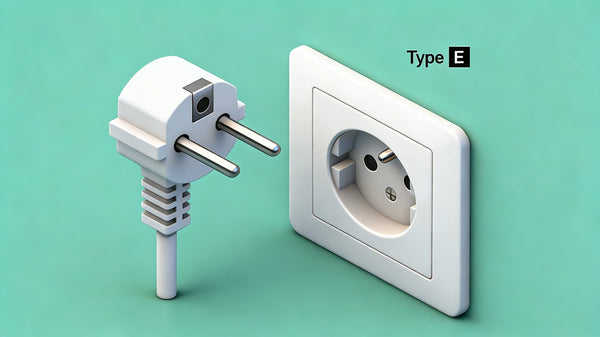
Type E sockets are the most common in Luxembourg, featuring two round holes with a grounding pin hole. These sockets are also prevalent in France and Belgium. Areas near the French border predominantly use Type E sockets.
Type F (German Standard/Schuko)

Type F sockets, also known as Schuko (from German "Schutzkontakt"), are mainstream in northern and eastern Luxembourg. They feature two round holes with two grounding clips. These sockets are widely used in Germany, Austria, and the Netherlands.
Type C (Europlug)
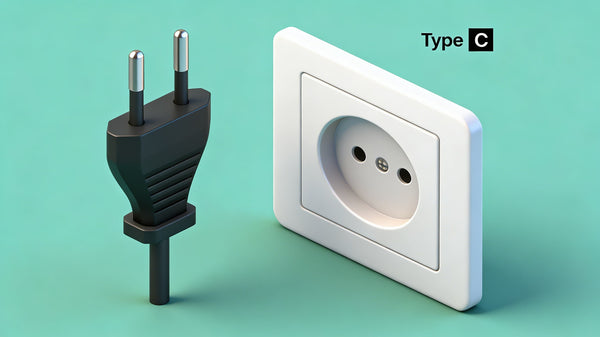
Type C is a two-pin round plug without grounding, suitable for low-power devices. While newer buildings in Luxembourg rarely install Type C sockets alone, both Type E and Type F sockets are compatible with Type C plugs.
3. Device Classification + Travel Essentials

Single Voltage Devices (110-120V Only)
Voltage converter REQUIRED:
- Traditional American hair dryers (Conair, Revlon, etc.)
- Curling irons, hair straighteners (non-dual voltage versions)
- Electric shavers (some older models)
- Steam irons, coffee makers
Dual Voltage Devices (100-240V)
Plug adapter ONLY:
- Phone chargers
- Laptop power adapters
- Camera chargers
- iPad/tablet chargers
- Modern electric toothbrushes
How to identify: Check the device label. If it says "INPUT: 100-240V", it's a dual voltage device.
4. DOACE Products for Your Luxembourg Trip
A. For Sensitive Electronics & Medical Devices (CPAP, High-end Laptops, Xbox)
These devices are extremely sensitive to power waveforms. We recommend models that provide 100% pure sine wave and can convert frequency from 50Hz to 60Hz.
DOACE LC-X35 (500W Max)

The performance flagship and the only model with built-in surge protection, providing the safest protection for sensitive circuits.
DOACE LC-X80 (800W)

If you're bringing multiple devices, this model features 3 US-standard outlets and supports 800W pure sine wave output, perfect for family sharing.
B. For High-Power Hair Styling Tools (Conair/Revlon Hair Dryers, Curling Irons)
DOACE HC-X11 (2200W)

Specifically designed for high-power heating tools, supporting up to 2200W.
Important Note: Only compatible with mechanical switch (physical button) devices. Strictly prohibited for Dyson or any precision hair tools with electronic screens or touch switches.
C. For Ultimate Portability (Phones, Laptops, Shavers Only)
DOACE LC-X30 (350W)

20% smaller and 30% lighter than the X35, saving valuable luggage space. No surge protection, making it also ideal for cruise ship use.
D. For Dual Voltage Devices Needing Fast Charging Only (Phones, iPad, Power Banks)
DOACE GaN 100W International Power Adapter

The best choice when voltage conversion is not needed. Features GaN technology, built-in retractable cable, and supports multi-country plug switching.
5. Practical Travel Tips
Phones/Laptops/Power Banks: Plug adapter only (almost all modern devices are dual voltage).
Hair Dryers/Curling Irons: Buy dual voltage travel versions, bring a converter, or purchase in Luxembourg.
Prepare in advance: Buy "US to Luxembourg adapter" + "Voltage Converter" on Amazon or at local stores, bring 2-3 spares.
Hotels/Airports: Usually have a few adapters to borrow, but they run out during peak times.
Socket selection: Luxembourg has stable electricity, but older buildings may have old sockets. Prioritize adapters with grounding function.
Frequency tip: If electronic clocks run slow, use battery-powered alternatives.
Check device labels: Always check the voltage specifications on your appliances before departure. If it says "100-240V", you only need an adapter; if it says "120V" only, you MUST use a voltage converter.
Long press to power on: If you choose the LC-X35, remember it uses a touch switch and requires a long press of 2-3 seconds to turn on.
Avoid specific appliances: We strongly recommend NOT using blenders, coffee makers, steam irons, or electric steamers with portable voltage converters, as their startup peak power is extremely high and can trigger overload protection.
Note socket depth: Some sockets in Luxembourg may be recessed. If you find the connection unstable, use the thick-pronged German (Schuko) plug adapter from the DOACE set for a more secure grounding connection.
Cruise policy: If your itinerary includes a cruise, do NOT bring the LC-X35 (it will be confiscated due to surge protection). Choose the LC-X30 or HC-X11 models without surge protection instead.
6. Frequently Asked Questions (FAQ)
Q1: Can I use my iPhone charger in Luxembourg?
A: Yes. iPhone chargers are dual voltage devices (100-240V). You only need a plug adapter. Luxembourg uses Type E/F sockets, and you can use the Euro or German (Schuko) adapters included in DOACE product sets.
Q2: Do I need a voltage converter for Luxembourg?
A: If you're bringing 110V-only American appliances (like traditional hair dryers or curling irons), you MUST bring a voltage converter. If you only have phones, laptops, and other dual voltage devices, you only need a plug adapter.
Q3: Are Luxembourg sockets the same as France and Germany?
A: Yes, Luxembourg uses the same Type E sockets as France and Type F (Schuko) sockets as Germany. Since Luxembourg is located between these two countries, both socket types are common. DOACE product sets include adapters for both types.
Q4: Why can't my Dyson hair dryer work with a 2000W converter?
A: 2000W converters (like HC-X11) use SCR technology to step down voltage through rapid "chopping" of the current waveform. This incomplete waveform is detected as a fault by Dyson and other devices with electronic chips, causing them to fail to start or become damaged. Electronic devices like Dyson require pure sine wave converters (like LC-X35).
Q5: What's the difference between LC-X35 and LC-X30?
A: LC-X35 is the performance flagship, offering 500W peak power with built-in surge protection and a touch switch (requires long press of 2-3 seconds). LC-X30 is more portable (20% smaller, 30% lighter), uses a physical toggle switch, has a 350W max power rating, and has no surge protection making it cruise ship friendly. Both support 50Hz→60Hz frequency conversion.
Q6: Can I use DOACE products on a cruise ship?
A: Yes, but choose the right model. Cruise ships typically prohibit devices with surge protection, so we recommend LC-X30, LC-C30, HC-C11, and HC-X11 models without surge protection. LC-X35 has built-in surge protection and may be prohibited on cruise ships.
7. Related Reading
- Luxembourg Travel Guide (Wikipedia)
- DOACE FAQ
- Type E Socket and Plug (DOACE)
- Type F Socket and Plug (DOACE)


