

The Netherlands, famous for its iconic windmills, vibrant tulip fields, and Amsterdam's picturesque canals, is a dream destination for many US travelers. As the home of the International Court of Justice and a hub of international commerce, it attracts millions of visitors annually. This comprehensive guide is tailored for US travelers, comparing American standards (120V/60Hz, Type A/Type B plugs) to help you avoid device damage or charging failures.
1. Voltage & Frequency (Key Differences)
Netherlands Standard: 230V voltage, 50Hz frequency.
US Standard: 120V voltage, 60Hz frequency.
Key Differences:
- Netherlands voltage is nearly double the US (230V vs 120V)
- Different frequencies (50Hz vs 60Hz), which may affect some devices
- Completely incompatible plugs: US uses Type A/B, Netherlands uses Type F/C
Risk Warning: Plugging 110V-only US appliances (like hair dryers, curling irons) directly into Dutch outlets will cause immediate device burnout and may pose fire hazards.
2. Local Outlet Types
The Netherlands primarily uses the following two outlet types:
Type F (German Standard/Schuko)

- Two round pins with grounding clips
- The primary outlet type in the Netherlands
- Common in Germany, Austria, Netherlands, Sweden
- Note: Dutch outlets are typically recessed, requiring the thicker Schuko plug for secure connection
Type C (Europlug)
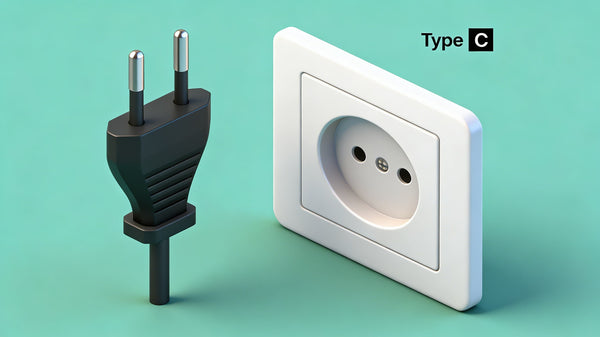
- Two round pins, no grounding
- Universal European standard
- Suitable for low-power devices like phone chargers
Dutch Outlet Characteristics: Dutch outlets typically feature a recessed design, where the socket is deeper than the plug face. This is why DOACE kits include the thicker Schuko plug adapter to ensure a secure and stable connection.
3. Device Categories + Travel Recommendations
Single Voltage Devices (Voltage Converter REQUIRED)
- Traditional American hair dryers (110-120V Only)
- Electric toothbrush charging bases
- Some electric shavers
- Irons, coffee makers
Dual Voltage Devices (Adapter Only)
- Phone chargers
- Laptop power adapters
- iPad/tablet chargers
- Camera chargers
- CPAP machines (verify specifications)

How to Check: Look at your device label. If it says "100-240V, 50/60Hz", you only need a plug adapter.
4. Recommended DOACE Products for Netherlands
A. For CPAP Machines, Medical Devices & High-End Laptops (Sensitive Electronics)
Recommended Models: DOACE LC-X35 (500W Max) or LC-X80 (800W)

Why We Recommend:
- The Netherlands uses 50Hz frequency, while US appliances expect 60Hz
- These models feature built-in AI chips that convert frequency to stable 60Hz
- Provide 100% pure sine wave output, crucial for protecting expensive medical equipment like CPAP machines
- LC-X35 is the only model with surge protection
Operation: LC-X35 uses a touch switch, requires long press 2-3 seconds to turn on/off
Important: LC-X35 has built-in surge protection, NOT suitable for cruise ships (may be prohibited); LC-X80 has no surge protection, cruise ship approved
B. For High-Power Hair Dryers, Curling Irons & Straighteners (Heating Tools)
Recommended Models: DOACE HC-X11 (2200W) or C15 (2000W)

Why We Recommend:
- Specifically designed for 110V mechanical switch styling tools
- Supports up to 2200W high-power output
Limitations:
- Uses SCR (Silicon Controlled Rectifier) technology, no frequency conversion
- NOT compatible with Dyson or electronic switch devices (will shut down due to incomplete waveform)
- No surge protection, cruise ship approved
C. For Charging Phones, iPads, MacBooks & Other "Dual Voltage" Devices
Recommended Models: DOACE GaN 100W/140W Universal Travel Adapter or Pico 5-in-1 Adapter

Why We Recommend:
- If your device label shows "100-240V", you don't need a voltage converter, just a plug shape adapter
- These adapters support PD fast charging, compact and lightweight, universal worldwide
- Covers 200+ countries including Type C/F plugs used in the Netherlands
5. Practical Travel Tips
Phones/Laptops/Power Banks: Adapter only needed (almost all modern devices are dual voltage).
Hair Dryers/Curling Irons: Buy dual voltage travel versions, bring a converter, or purchase in the Netherlands.
Prepare in Advance: Buy "US to Netherlands adapter" + "Voltage Converter" on Amazon or at local stores, bring 2-3 spares.
Hotels/Airports: Usually have limited adapters for loan, but may run out during peak times.
Dutch Outlet Special Note: Dutch outlets commonly feature a recessed design. If you experience loose connections, use the thicker Schuko plug adapter from your DOACE kit for more secure grounding.
Frequency Tip: If electronic clocks run slow, use battery-powered alternatives.
Check Device Labels: Always check voltage specifications before departure. If labeled "100-240V", adapter only; if "120V" only, you MUST use a voltage converter.
Long Press to Activate: If you choose LC-X35, remember it uses a touch switch and requires long press 2-3 seconds to activate output.
Avoid Specific Appliances: Strongly recommend NOT using juicers, coffee makers, irons, or electric steamers with portable converters, as their startup peak power is extremely high and may trigger overload protection.
Cruise Policy: If your itinerary includes a cruise, do NOT bring LC-X35 (surge protection may be confiscated). Choose LC-X30 or HC-X11 instead.
6. Frequently Asked Questions (FAQ)
Q1: Will my iPhone charger work in the Netherlands?
A: iPhone chargers support 100-240V wide voltage. You only need a Type F plug adapter, no voltage converter needed.
Q2: Do I need a voltage converter?
A: It depends on your devices. If your device only supports 110-120V (like traditional American hair dryers), you MUST use a voltage converter. If it supports 100-240V (like phone chargers, laptops), you only need a plug adapter.
Q3: Are Netherlands outlets the same as Germany?
A: Yes, the Netherlands uses the same Type F outlets (also known as Schuko) as Germany. If you've been to Germany, you can use the same adapters.
Q4: Why can't my Dyson hair dryer use a 2000W converter?
A: 2000W converters (like HC-X11) use SCR technology, which produces an incomplete waveform. Dyson and other devices with electronic chips will detect this as a fault and shut down. Use electronic-compatible models like LC-X35 instead.
Q5: What's the difference between LC-X35 and LC-X30?
A: LC-X35 has higher power (500W Max), built-in surge protection, suitable for heating tools like curling irons, uses touch switch. LC-X30 is more compact (20% smaller), has a physical toggle switch, ideal for laptops and medium-low power devices.
Q6: Can I use DOACE products on a cruise ship?
A: Yes, but choose models without surge protection (LC-X30, HC-C11, HC-X11). LC-X35 may be prohibited on cruises due to its surge protection feature.
Related Reading
Related Reading:


