

Canada is the article where the honest answer matters: you probably do not need to buy a converter. If a guide tries to sell you one before asking what device you are using, be suspicious.
That said, “same voltage” does not mean “no planning.” If you are driving across provinces, staying in older lodges, working remotely from a rental, or charging five family devices after a day outside, outlet access can still become annoying fast.
1. Canada Power Snapshot
| Item | Canada | Meaning for US travelers |
|---|---|---|
| Voltage | 120V | Same nominal voltage as the US |
| Frequency | 60Hz | Same as the US |
| Plug types | Type A and Type B | US plugs usually fit directly |
For most devices, Canada is electrically straightforward. Your phone charger, laptop charger, CPAP power supply, camera charger, toothbrush charger, and most US grooming tools can usually be used the same way they are used at home.
Still, check the device label. Not because Canada is tricky, but because good power habits should not change at the border.
Type B outlets are especially important if you have a grounded three-prong plug.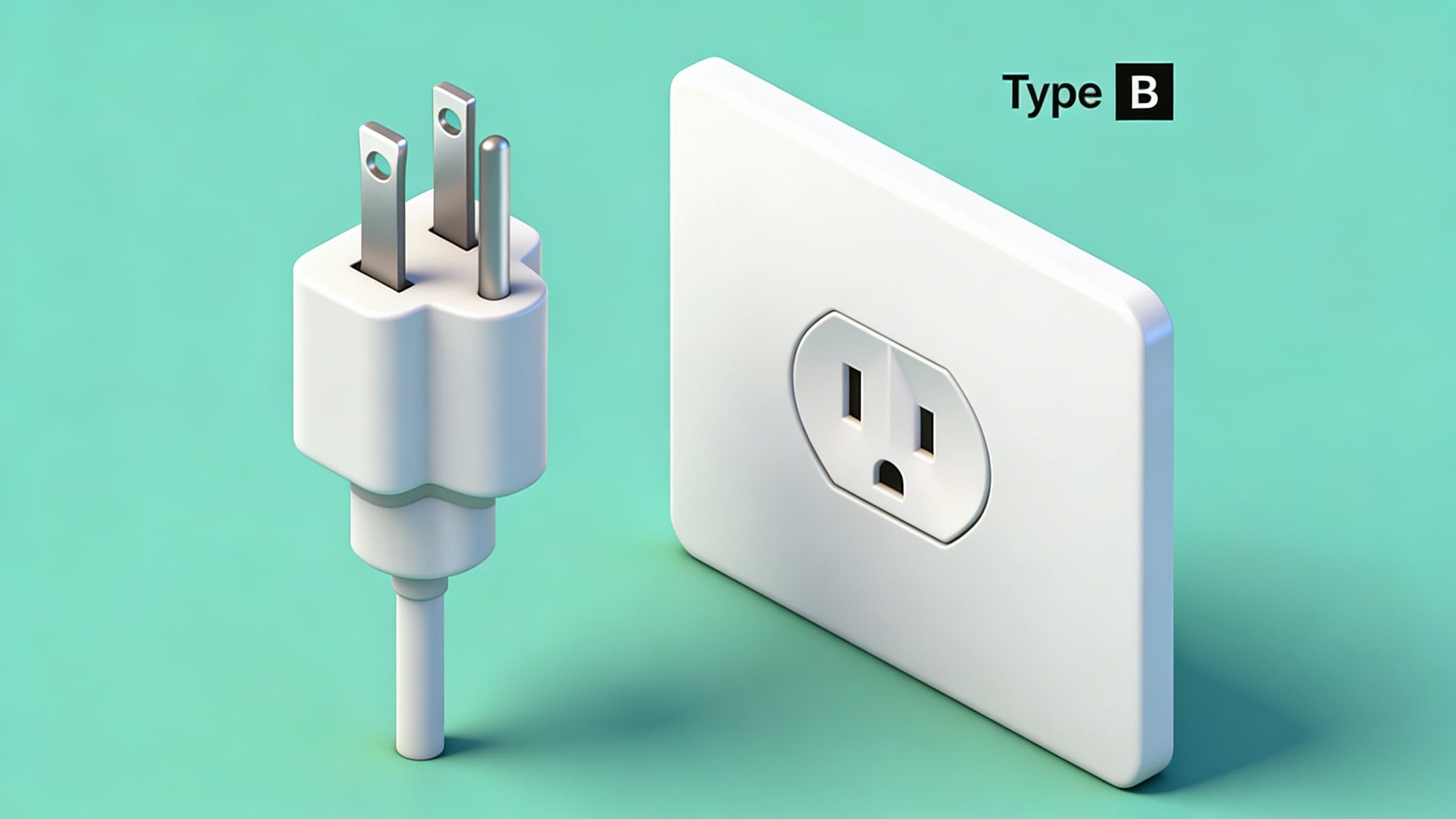
2. DOACE 4-Check for Canada
- Shape: Type A/B means most US plugs fit. Grounded devices still need a grounded outlet.
- Voltage: Canada’s 120V power matches US expectations for most devices.
- Load: High-watt appliances still deserve respect. Cabin wiring and old rentals may not love multiple heaters, dryers, or kitchen devices.
- Use Case: Road trips, family trips, ski lodges, and remote work setups benefit from organized charging more than voltage conversion.

3. Device Matrix for Canada
| Device | Converter? | Canada reality check |
|---|---|---|
| Phone / laptop / tablet | No | A multi-port GaN charger is useful for convenience, not voltage |
| CPAP | No for most US units | Use original power supply and a stable outlet near the bed |
| Camera gear | No if charger is US or universal voltage | Bring extra USB-C and camera battery charging capacity for remote areas |
| Hair tools | Usually no | Do not overload a bathroom outlet in an older lodge |
| Kitchen appliances | No voltage converter needed, but think twice | Short-term travelers rarely need to pack them |
4. What I Would Pack
Canada is the exception to the converter-first rule because the destination voltage matches the US. Skip the voltage converter unless you have a genuinely unusual device. Bring a cleaner charging setup instead. The DOACE 100W GaN International Power Adapter makes sense for laptops, phones, tablets, headphones, camera batteries, and family charging nights. It does not convert voltage, and in Canada it usually does not need to.

5. Common Mistakes
- Buying a converter for Canada because the trip is “international.”
- Assuming every old rental outlet is grounded or tight.
- Charging a whole family from one weak outlet with low-quality adapters.
- Using indoor chargers in damp cabins, garages, or outdoor locations.
- Forgetting car charging for long drives between cities.
Figure: Canada is low-risk for voltage conversion, but charging organization still matters.
6. Real Canada Scenarios
Canada is electrically familiar for US travelers, which makes it easy to under-plan the small things. In a downtown Toronto or Vancouver hotel, the outlet shape and voltage are usually exactly what you expect. Your laptop charger, phone charger, CPAP supply, camera charger, and toothbrush charger should behave as they do at home. The real limitation is often outlet placement: a desk outlet may be occupied by a lamp, a bedside outlet may be hidden, and USB ports in hotel furniture can be slow or unreliable.
Older cabins, ski rentals, and rural guesthouses deserve a little more attention. A three-prong US plug needs a properly grounded outlet. If your device has a ground pin, do not force it through a two-prong-only situation with a random cheater adapter. This matters for some laptop bricks, monitors, medical devices, and higher-load equipment.
Winter travel adds another layer. Heated gear, boot dryers, portable kettles, and hair tools can draw far more power than phones and laptops. You still usually do not need voltage conversion, but you should treat high-watt appliances with respect. Do not run several heat devices from one tired extension cord in a rental.
7. Read the Label Before You Decide
| Label text | Canada decision | Practical note |
|---|---|---|
Input: 100-240V 50/60Hz |
No converter | This is common on chargers and works easily in Canada. |
Input: 120V 60Hz |
No converter | Canada commonly uses the same nominal voltage and frequency as the US. |
| Three-prong grounded plug | Use a grounded outlet | The shape may fit, but grounding still matters for safety and stability. |
8. Packing Plan for Canada
- City weekend: Bring your normal chargers and one reliable multi-port adapter for phones, watches, and earbuds.
- Ski trip: Avoid overloading one outlet with boot dryers, hair tools, and multiple chargers.
- Family travel: A high-output GaN charger can reduce arguments over the one easy bedside outlet.
- Work trip: Use the original laptop charger and avoid relying on slow hotel USB-A ports for important devices.
The trustworthy answer for Canada is almost boring: you usually do not need to buy a converter or special adapter. But the boring answer is useful because it stops you from packing unnecessary equipment and focuses your attention on outlet access, grounding, and cable organization.
9. Troubleshooting in Canada
If a device is not charging in Canada, the first suspect is usually not voltage. Check the cable, charger, outlet switch, power strip, and hotel USB port. A surprising number of hotel USB outlets are too weak for tablets or laptops and are better treated as emergency phone chargers only.
If a three-prong plug does not have a grounded outlet nearby, do not remove the ground pin or force a workaround. Ask the hotel for another outlet location or use a properly grounded setup. This is a small detail, but it is exactly the kind of small detail that matters for expensive work gear.
If you are staying in a ski rental, cabin, or older house, think about load. A phone charger and a laptop charger are easy. A boot dryer, space heater, hair dryer, and kettle running together are a very different electrical situation. The voltage may match the US, but the circuit still has limits.
10. Final Decision Flow
- If the device works in the US, it will usually work in Canada without voltage conversion.
- If the plug has three prongs, find a grounded outlet instead of forcing it into a two-prong situation.
- If the device is high-watt, avoid sharing the same extension cord with other high-load appliances.
- If you need several USB devices every night, bring a higher-output multi-port charger.
Canada is the page where the best product advice is restrained. You do not need a voltage converter for normal US gear. You may still want a better charging setup because modern travel means several small devices, not one wall plug.
11. How to Choose What to Buy
For Canada, the best buying advice is deliberately modest. Do not buy a voltage converter for normal US electronics. Do not buy a universal adapter because someone told you all international travel needs one. Canada is one of the clearest cases where the plug shape and voltage are already familiar for American travelers.
The purchase that can still make sense is a better charger. Modern trips involve more small electronics than the old "one phone charger" model: laptop, phone, tablet, watch, earbuds, camera, power bank, and sometimes a second work device. A strong GaN charger can replace several small chargers and make a hotel room easier to use.
If you are going to a cabin, ski rental, or older property, think less about adapter type and more about outlet count, grounding, and load. A compact charger can help organize low-watt devices, but it should not become part of a pile of high-watt appliances. Keep heat devices on appropriate outlets, and do not turn one extension cord into the power plan for the whole room.
In other words, Canada is a "bring less, charge smarter" destination. The right setup looks almost like your US setup, just tidier. That is useful advice because it saves money and luggage space while still making the trip smoother.
12. FAQ
Can I plug US devices into Canadian outlets?
Usually yes. Canada commonly uses Type A/B outlets and 120V power.
Do I need a voltage converter for Canada?
Usually no. Canada uses the same nominal voltage and frequency as the US.
Do I need a plug adapter for Canada?
Most US travelers do not. A charger with multiple USB ports may still be useful.
Can I use my CPAP in Canada?
Usually yes with the original power supply. Check the label and use a stable bedside outlet.
Can I bring hair tools to Canada?
Most US hair tools work electrically, but high-watt tools still need a suitable outlet.
What should I pack for a Canadian road trip?
A multi-port charger, reliable USB-C cables, a car charger, and the original chargers for devices you cannot replace easily.
Do I need a special adapter for a Canadian hotel?
Usually no. Most Canadian hotel outlets accept the same plug shapes used in the US. What you may need is a better charging plan if the useful outlets are hidden behind furniture or already occupied by lamps, clocks, or hotel devices.
Can I use a US power strip in Canada?
A US power strip may work electrically, but it is not always the smartest travel choice. Check the rating, avoid high-watt loads, and do not use old or damaged strips. For phones and laptops, a compact multi-port charger is usually cleaner and safer.
What should I do if my rental has only two-prong outlets?
Use two-prong devices normally, but do not defeat the ground pin on grounded equipment. For laptops, monitors, medical equipment, or high-load devices, ask the host for a properly grounded outlet or choose a different location in the room.
13. Bottom Line for Canada
Canada should not make your power setup complicated. The most accurate answer is also the most helpful one: do not buy a converter for ordinary US devices, and do not treat Canada like a high-voltage overseas destination. Put your attention into the parts of travel that actually fail: missing cables, slow hotel USB ports, not enough outlets for a family, and grounded plugs in older rentals.
If your trip includes work gear, medical equipment, or winter devices, do one extra pass over the labels and ratings before you leave. That small check gives you the confidence of a real plan without filling your bag with equipment you will never use.
Canada is simple, and that is useful. Save your converter budget for countries with a real voltage difference; for Canada, pack a better charging setup and enjoy the trip.


