

Most travel adapter mistakes happen because the country question sounds simple. You type a destination into Google, see a plug letter such as Type C, Type G, or Type I, and assume the shopping decision is finished. That is only the first filter. The wall outlet has a shape. The wall also supplies a voltage and frequency. Your charger or appliance has an input rating. Your device may be a low-power charger, a grounded appliance, a heat tool, a medical device, or a motor load. Those details can send you to completely different packing choices.
Use this page as a fast country lookup and a buying filter. For a data-heavy voltage table, open DOACE's country voltage, frequency, and plug type table. For the visual meaning of Type A through Type O, use the world plug types A to O cheat sheet. If you want a guided step-by-step path for your own bag, use the DOACE Travel Power Finder.
Start With the 4-Check Before You Buy
The safest answer comes from four checks in order. The country tells you where to begin. The device label tells you whether a simple adapter is enough. The load type tells you whether a converter is even appropriate. If you skip straight from country name to shopping cart, you can buy the right-looking part for the wrong electrical problem.
Country Plug Shape
Find the common outlet type at your destination: Type A/B, C/E/F, G, I, J, K, L, M, N, or another local standard.
Voltage and Frequency
Check whether the destination is near 100-127V, 220-240V, or mixed. Frequency matters for some motors, pumps, clocks, and specialized gear.
Device INPUT Label
Look for INPUT, not OUTPUT. A charger that says 100-240V is very different from an appliance that says 120V only.
Load and Use Case
A phone charger, CPAP, curling iron, hair dryer, power strip, and electric kettle should not be treated as the same travel load.
A simple rule helps: if the device already accepts the destination voltage, solve plug shape and charging output. If the device does not accept the destination voltage, a plug adapter is not enough. If the device is sensitive, medical, motorized, high-wattage, or used while you sleep, check the manual and the device class before using any converter.
Popular Countries: Plug Adapter and Voltage Lookup
This table focuses on common U.S. travel destinations. It is not meant to replace a full engineering database. It is a packing table: the plug type tells you what physical adapter may fit, while the voltage row tells you when the device label becomes decisive. For a wider data table, compare with IEC World Plugs, WorldStandards, and DOACE's traveler voltage table.
| Destination | Common plug types | Typical supply | What to pack first | Extra check |
|---|---|---|---|---|
| Canada | Type A/B | 120V, 60Hz | Usually no plug adapter for U.S. two-prong devices; check three-prong fit. | High-watt appliances and grounded plugs still deserve a label check. |
| Mexico | Type A/B | 127V, 60Hz | Often physically simple for U.S. travelers. | Older rooms, loose outlets, and high-watt appliances should not be guessed. |
| Japan | Type A/B | 100V, 50/60Hz by region | Many U.S. plugs fit, but three-prong plugs may need an adapter. | Motors, heat devices, and gear expecting full 120V may perform differently. |
| Taiwan | Type A/B | 110V, 60Hz | Often familiar plug shape for U.S. electronics. | Check grounded or high-watt equipment before use. |
| Colombia | Type A/B | 110V, 60Hz | Often close to the U.S. route for common chargers. | Do not skip labels on appliances or medical gear. |
| United Kingdom | Type G | 230V, 50Hz | Type G adapter or multi-country adapter for wide-voltage electronics. | 120V-only appliances need a converter check or a local alternative. |
| Ireland | Type G | 230V, 50Hz | Same broad route as the UK for plug shape. | Adapter shape does not reduce voltage. |
| France | Type C/E | 230V, 50Hz | Europe-compatible adapter for wide-voltage chargers. | Grounding and recessed outlets can matter for some plugs. |
| Germany | Type C/F | 230V, 50Hz | Type C/F path for wide-voltage electronics. | Type F grounding clips are not the same as Type E grounding. |
| Spain | Type C/F | 230V, 50Hz | Europe-compatible adapter for 100-240V chargers. | Do not run 120V-only heat tools through a shape adapter alone. |
| Italy | Type C/F/L | 230V, 50Hz | Italy-aware adapter, especially outside basic two-pin charging. | Type L 10A/16A fit can surprise travelers; see the Italy Type L guide. |
| Switzerland | Type C/J | 230V, 50Hz | Switzerland-aware adapter for plugs that are larger than a simple Europlug. | Some generic Europe adapters do not fit Type J well; see the Switzerland Type J guide. |
| Denmark | Type C/E/F/K | 230V, 50Hz | Low-power two-pin electronics are often simple; grounded needs are different. | Type K grounding deserves a separate check; see the Denmark Type K guide. |
| Greece | Type C/F | 230V, 50Hz | Europe-compatible adapter for wide-voltage electronics. | Converter decision depends on the device label. |
| Portugal | Type C/F | 230V, 50Hz | Same broad electronics route as much of continental Europe. | High-watt 120V-only devices need a separate plan. |
| Australia | Type I | 230V, 50Hz | Type I adapter for 100-240V chargers. | U.S. single-voltage hair tools face high-voltage risk. |
| New Zealand | Type I | 230V, 50Hz | Type I adapter or multi-country adapter for wide-voltage electronics. | Do not assume a converter can safely run every appliance. |
| China | Type A/C/I | 220V, 50Hz | Flexible plug coverage for wide-voltage electronics. | Multi-standard sockets are not voltage converters. |
| Hong Kong | Type G | 220V, 50Hz | Type G route for wide-voltage devices. | 120V-only devices need a voltage plan. |
| Singapore | Type G | 230V, 50Hz | Type G adapter or multi-country GaN for electronics. | Shape and voltage are separate checks. |
| Malaysia | Type G | 230-240V, 50Hz | Type G route for phone, laptop, and camera chargers with 100-240V labels. | Single-voltage devices should not be used through adapter-only setups. |
| Thailand | Type A/B/C/O mixed | 230V, 50Hz | Flexible adapter for mixed plug shapes. | A familiar U.S.-style slot does not mean U.S. voltage. |
| Vietnam | Type A/C/G mixed | 220V, 50Hz | Flexible adapter for mixed hotel outlets. | Do not rely on physical fit for 120V-only devices. |
| India | Type C/D/M | 230V, 50Hz | India-aware plug coverage for wide-voltage electronics. | High-power appliances need manual and wattage checks. |
| South Korea | Type C/F | 220V, 60Hz | Type C/F adapter for wide-voltage electronics. | Voltage is high like Europe; frequency differs from many European countries. |
| United Arab Emirates | Type G | 230V, 50Hz | Type G adapter path for 100-240V electronics. | U.S. heat tools need a converter or local-device decision. |
| Saudi Arabia | Commonly Type G in many travel references | 230V, 60Hz in many references | Check your lodging and device label before travel. | Frequency-sensitive devices deserve manufacturer guidance. |
| Israel | Type C/H | 230V, 50Hz | Type H-aware planning, especially for grounded use. | Do not assume every Europe adapter is ideal; see the Israel Type H guide. |
| South Africa | Type C/M/N | 230V, 50Hz | Plan for Type M/N, not just a generic Europe plug. | See the South Africa Type M vs Type N guide. |
| Brazil | Type C/N | 127/220V mixed, 60Hz | Type N adapter plus local voltage verification. | Mixed voltage makes guessing especially risky; see the Brazil Type N guide. |
| Argentina | Type C/I | 220V, 50Hz | Type I/C coverage for wide-voltage electronics. | 120V-only U.S. appliances need a converter check. |
| Chile | Type C/L | 220V, 50Hz | Type C/L planning for wide-voltage chargers. | Single-voltage devices need more than shape matching. |
| Peru | Type A/B/C | 220V, 60Hz | Do not rely on familiar Type A/B shape. | This is a classic same-shape, different-voltage trap. |
| Morocco | Type C/E | 220V, 50Hz | Europe-style adapter path for wide-voltage electronics. | Heat tools and medical devices need label checks. |
| Egypt | Type C/F | 220V, 50Hz | Type C/F adapter path for 100-240V chargers. | Do not plug 120V-only appliances directly into local voltage. |
Region Shortcuts for U.S. Travelers
Regional shortcuts are useful when you are packing for a route rather than one city. The catch is that regions are not electrical standards. "Europe," "Asia," or "South America" can include several plug types and voltage patterns. Use the cards below to narrow the problem, then check the exact countries in your itinerary.
Continental Europe
Expect 230V and Type C/E/F in many countries, but do not ignore Italy Type L, Switzerland Type J, Denmark Type K, recessed outlets, or grounding differences.
Type E vs Type F and recessed Europe outlet fit explain the common traps.
UK, Ireland, Singapore, Malaysia
Type G is the main physical shape. Voltage is usually in the 220-240V family, so wide-voltage chargers are simple, while 120V-only appliances are not.
For a visual shape reference, see the Type G plug guide.
Japan, Korea, Taiwan
These nearby trips are not the same. Japan is usually 100V with 50/60Hz by region. South Korea is 220V/60Hz with Type C/F. Taiwan is closer to the North American voltage path.
For Japan specifically, see DOACE's Japan voltage guide.
Australia and New Zealand
Type I plus 230V is the basic route. A wide-voltage laptop charger usually needs a Type I-compatible adapter; a U.S. 120V-only hair tool needs a separate voltage decision.
For a full country pair breakdown, see Australia and New Zealand from the U.S..
South America
Brazil, Argentina, Chile, Peru, and Colombia are very different. Brazil can be mixed voltage. Peru can show familiar Type A/B shapes while commonly using 220V. Colombia is closer to the U.S. route.
Start with the Peru and Chile guide or the Brazil Type N page.
Africa and Middle East
Do not pack by continent name. South Africa has Type M/N issues. Kenya and the UAE often send U.S. travelers toward Type G. Israel uses Type H. Morocco and Egypt are closer to Europe-style plug paths.
Photography, CPAP, and safari charging kits should be checked by device label and charging load.

Figure 1: Plug letters describe physical shapes. They do not guarantee voltage, frequency, grounding, or device compatibility.
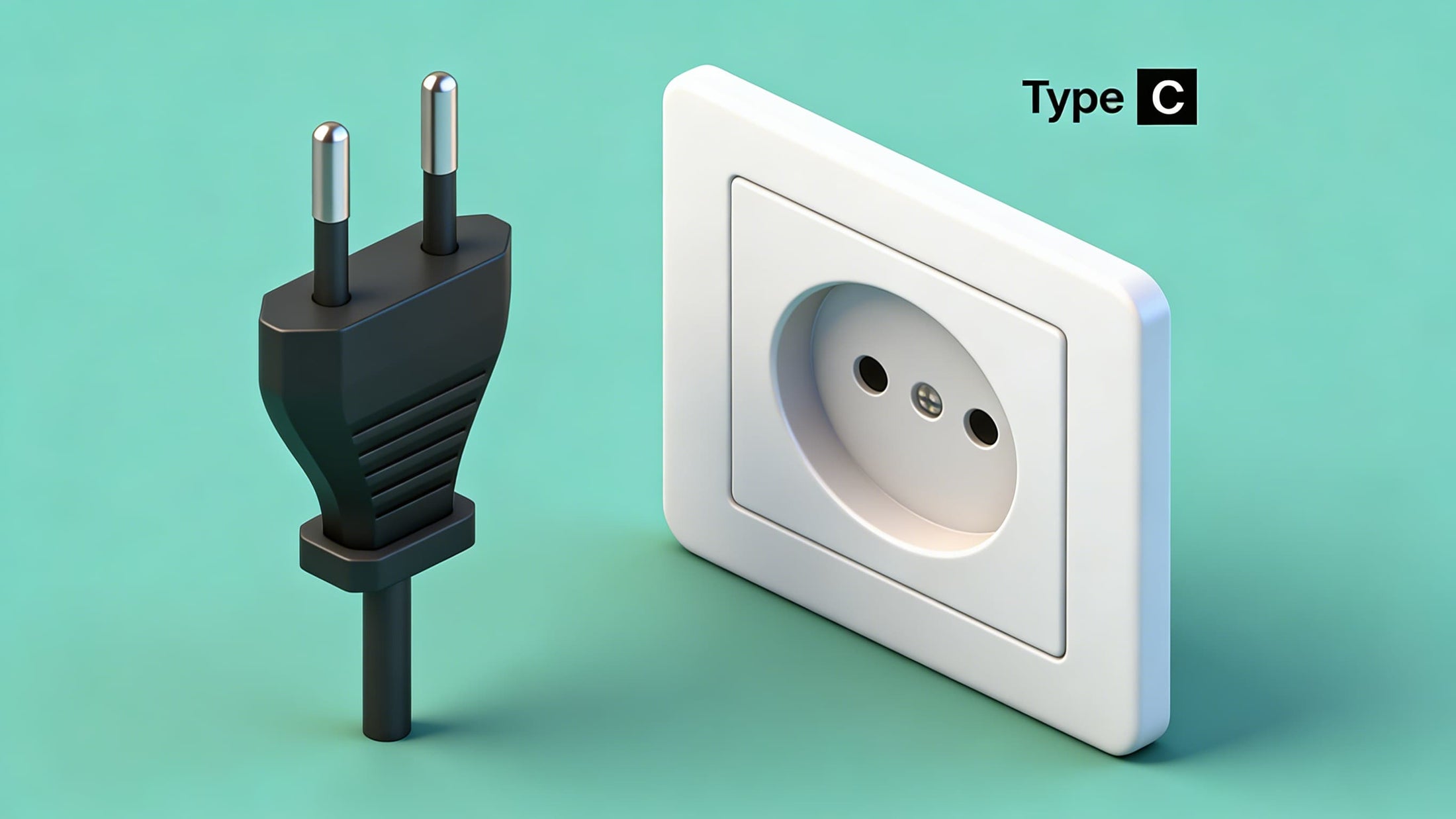
Type C
Common across continental Europe and many mixed outlets. Simple for many two-pin wide-voltage chargers, but not grounded.
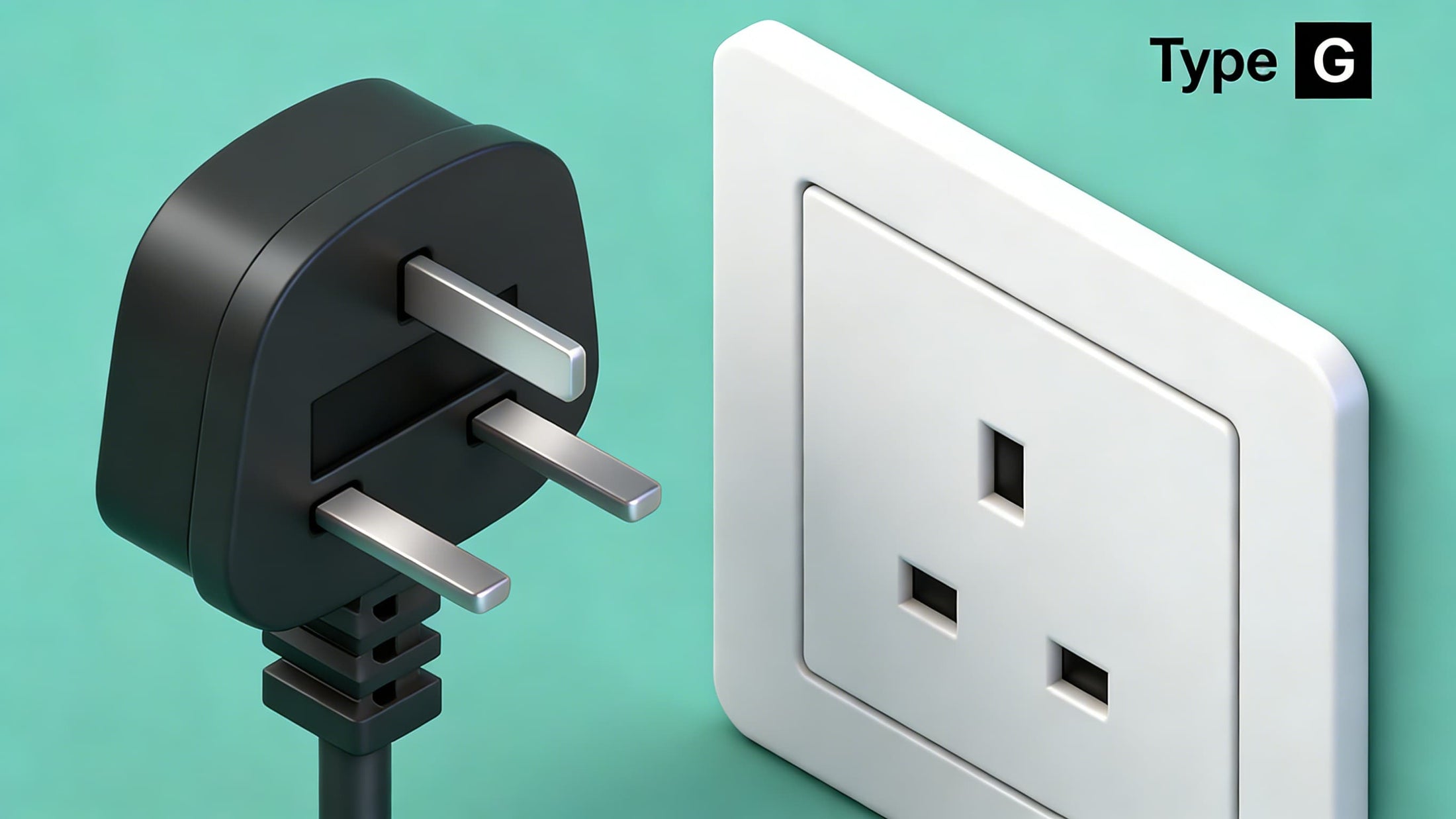
Type G
Common in the UK, Ireland, Singapore, Malaysia, Hong Kong, Kenya, and Gulf destinations. Voltage is usually high for U.S. single-voltage appliances.
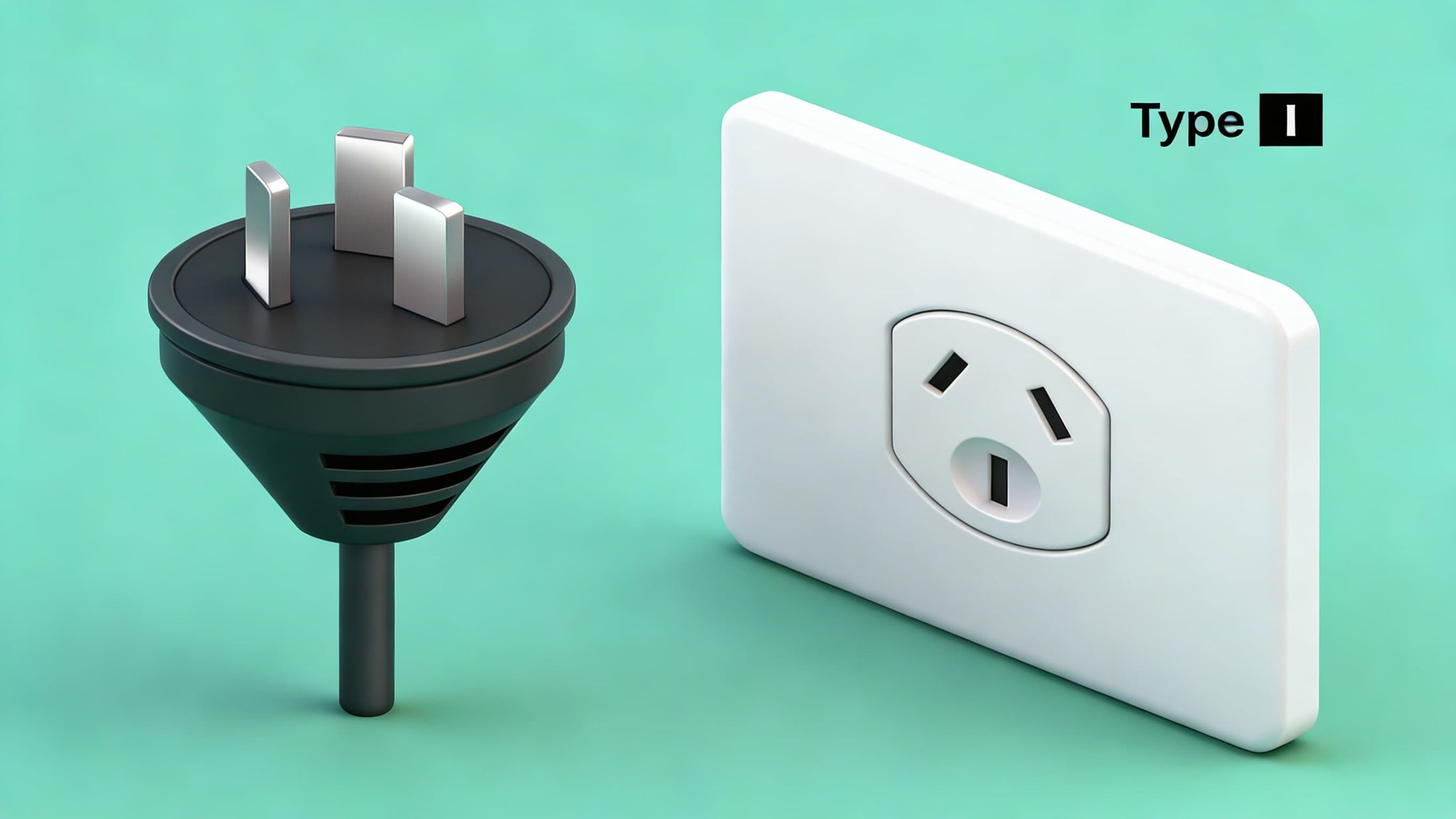
Type I
Used in Australia, New Zealand, China, Argentina, and some Pacific routes. Check voltage before using U.S. appliances.
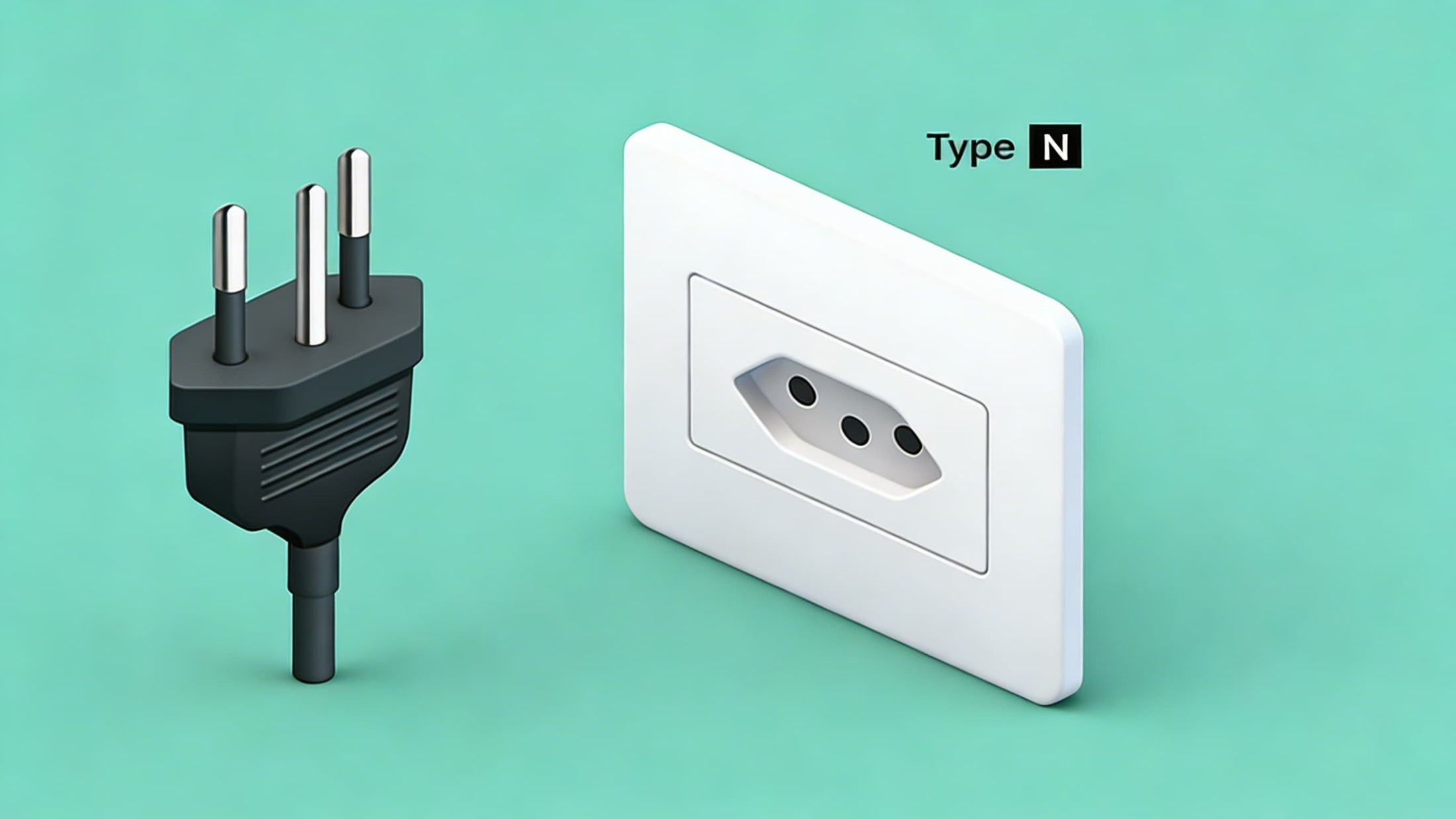
Type N
Important in Brazil and newer South African contexts. Brazil also requires local voltage verification because 127V and 220V can both appear.
Plug Letters Are Shape Clues, Not Voltage Promises
A plug letter answers one question: what physical shape may fit the wall outlet? It does not answer whether the voltage is safe for the device. This is why plug charts can create overconfidence. Japan and the United States both use Type A/B shapes, but Japan is commonly 100V. Peru can show Type A/B shapes, yet many references list 220V. Thailand and Vietnam can have outlets that accept U.S.-style flat blades, but the local supply can still be 220-230V. Brazil uses Type N and can be 127V or 220V depending on location. Shape is a clue; the device label is the decision.
Europe creates a different version of the same problem. A low-power two-pin Type C adapter can be useful across many continental European outlets, but it does not solve Type G in the UK, Type J in Switzerland, Type L in Italy, Type K grounding in Denmark, or grounding needs for a three-prong device. If your trip includes more than one country, write the country list first, then choose the adapter. Do not pack from the word "Europe" alone.
Read the Device INPUT Label Before You Buy
The most useful words on your charger are usually near INPUT. Do not confuse input with output. A USB-C charger might output 20V to your laptop, but that is not the wall voltage it accepts. Look for a line such as INPUT: 100-240V, 50/60Hz. That means the power supply is built for the common voltage and frequency range used in most travel destinations. For that kind of device, you normally need plug shape and charging output, not a voltage converter.

Figure 2: A 100-240V input label usually means the charger accepts common international wall voltage. You still need the correct plug shape.
If the label says 120V only, 110V only, or lists only a narrow input range, the answer changes. In a 220-240V destination, a plug adapter alone can send too much voltage into the device. That is where you check whether a voltage converter is allowed, whether the wattage fits, whether the load is sensitive or motorized, how long it will run, and whether the manufacturer forbids converter use. If there is no readable label, do not guess. Search the manual, inspect the original power supply, contact the manufacturer, or use a local substitute.
| Device label or situation | What the country row tells you | What it cannot tell you | Safer next step |
|---|---|---|---|
| Phone charger says 100-240V 50/60Hz | Which plug shape fits the wall. | Whether your charger has enough USB-C output or enough ports. | Use a country adapter or GaN travel adapter with enough output. |
| Laptop charger says 100-240V 50/60Hz | Which adapter shape is needed. | Whether 65W, 100W, or 140W USB-C output is right for the laptop. | Match plug shape and charging wattage. |
| Curling iron says 120V only | The outlet shape and local voltage family. | Whether the tool is compatible with conversion. | Use a compatible converter only after wattage and manual checks, or pack a dual-voltage tool. |
| CPAP power supply says 100-240V | Which outlet adapter is needed at the destination. | Whether the bedside outlet is accessible or whether backup power is needed. | Usually adapter-only for voltage, with extra planning for medical reliability. |
| CPAP or medical accessory says 120V only | Whether the destination is high voltage. | Whether waveform, runtime, and manufacturer rules allow conversion. | Check manufacturer guidance; if conversion is allowed, favor a clean waveform route within rating. |
| No readable label | Almost nothing decisive. | Voltage, frequency, power draw, and load type. | Do not use it abroad until the manual or manufacturer confirms compatibility. |
Voltage Groups: Easy, High-Voltage, and Verify Locally
For U.S. travelers, destinations often fall into three practical groups. Low-voltage or near-U.S. destinations can be physically familiar, but still need label checks. High-voltage destinations are where U.S. 120V-only appliances are most likely to fail if used through a shape adapter. Mixed or verify-locally destinations require extra caution because the country name alone is not enough.
Figure 3: Typical packing behavior by destination voltage group. The chart is a planning aid; the device label still decides.
Frequency is a second layer. Many modern chargers support 50/60Hz, so they work in both 50Hz and 60Hz countries when the voltage range also matches. Frequency becomes more important for motors, pumps, clocks, turntables, fans, and specialized accessories. A voltage converter does not automatically convert frequency. For a deeper background, see DOACE's 110V, 220V, 50Hz, and 60Hz explainer.
Adapter, GaN Adapter, Converter, or Local Device?
A travel adapter changes plug shape. A GaN travel adapter combines plug-shape convenience with USB-C/USB-A charging for wide-voltage electronics. A voltage converter changes voltage for certain compatible devices. A transformer is a heavier voltage-changing device usually used for more stationary or long-duration situations. If those categories feel blurry, start with DOACE's adapter vs converter vs transformer breakdown.
The buying mistake is treating these tools as upgrades along one line. They are different tools. A more powerful converter is not a safer version of an adapter. A universal adapter is not a small converter. A GaN charger is not a step-down transformer. A local hair dryer can be a better answer than packing a converter at all.
Choose by Device, Not Just by Country
The same destination can produce several correct answers. In France, a 100-240V laptop charger needs the right plug shape and enough USB-C output. A 120V-only curling iron should not be plugged into a 230V outlet through adapter-only hardware. A CPAP with a wide-voltage power supply usually follows an adapter-only route for voltage, but a 120V-only medical accessory requires manufacturer guidance before any converter is considered. Country first, device second, product third.
| Device in your bag | Typical label to look for | Likely route | DOACE direction | Not-for boundary |
|---|---|---|---|---|
| Phone, tablet, earbuds | 100-240V charger | Adapter or GaN adapter | 100W GaN if you want one hub for several electronics. | No voltage conversion for 120V-only appliances. |
| USB-C laptop | 100-240V charger, output wattage requirement | Adapter or higher-output GaN | 100W for many laptops; 140W for heavier USB-C charging needs. | Not for laptops that need proprietary power beyond the adapter's USB-C capability. |
| Camera and drone batteries | Usually 100-240V, but check each charger | Adapter/GaN plus enough ports | 100W or 140W GaN depending on charging load. | Do not overload one wall outlet with unknown chargers. |
| Electric toothbrush or shaver base | 100-240V or narrow 120V label | Adapter-only if wide-voltage; converter check if 120V-only | LC-C30/LC-X80 only when conversion is required and compatible. | Bathroom shaver outlets are not general high-power outlets. |
| Curling iron or flat iron | Dual-voltage or 120V only | Adapter-only for dual-voltage; converter/local tool for 120V-only | LC-C30/LC-X80/C15 depending wattage and compatibility. | Do not treat digital/smart heat tools as simple resistive loads without manual approval. |
| CPAP or medical equipment | Power brick input rating | Often adapter-only if brick is 100-240V; special planning if not | LC-X35 only when conversion is required, wattage fits, and manufacturer guidance allows it. | Do not experiment with essential medical devices. |
| Traditional hair dryer | 120V only, often high wattage | Hotel/local dryer or high-watt converter only if compatible | C15 only for compatible traditional high-watt devices within instructions. | Not for complex smart hair tools or devices whose maker forbids converters. |
| U.S. power strip | Often rated for U.S. voltage | Usually avoid as a travel shortcut | Use safer multi-port charging or local-rated power distribution. | Do not plug a U.S. strip into an adapter and call it a universal system. |
Figure 4: The route starts with the device label. Products enter only after the voltage and load checks are clear.
Choose a DOACE Travel Power Setup
The right DOACE setup depends on the device group, not only on the country. If every item in your bag is wide-voltage, a GaN travel adapter can be the cleanest answer. If one device is single-voltage, the converter decision belongs to that one device, not to the entire trip. If a device is sensitive or runs overnight, waveform and manufacturer guidance matter. If a device is a high-watt heat appliance, compatibility and not-for rules matter more than raw wattage alone.

DOACE 100W GaN International Power Adapter
Best for: phones, tablets, cameras, headphones, and many USB-C laptops when the charger or device accepts 100-240V input.
Not for: 120V-only appliances, AC voltage conversion, guaranteed grounding, U.S. power strips, or high-watt heat tools.
Why it fits this page: it solves plug-shape and charging-output convenience after the device label already passes the voltage check.
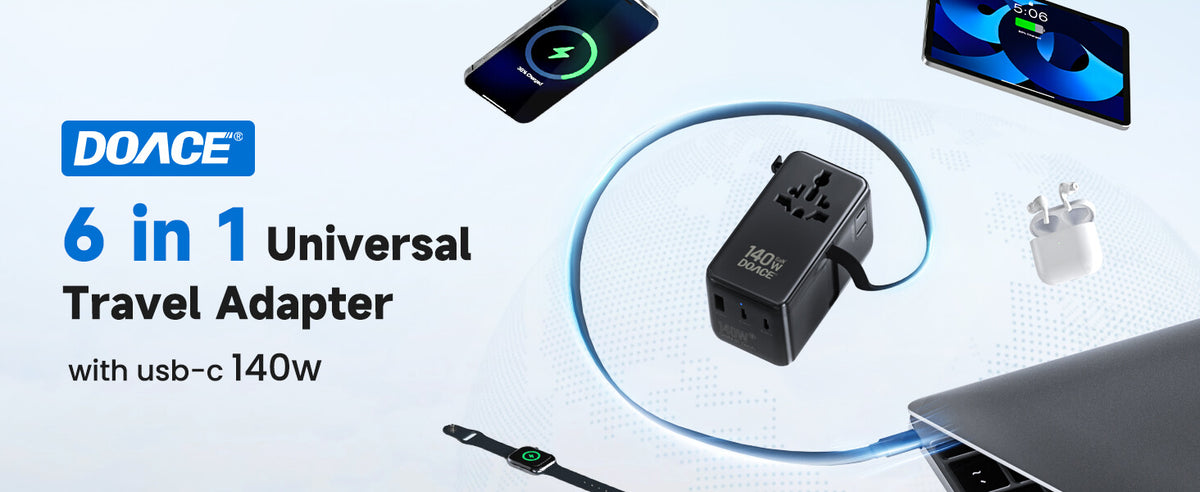
DOACE 140W GaN Travel Adapter
Best for: travelers carrying a higher-output USB-C laptop plus phone, tablet, camera batteries, or work accessories, when those devices are wide-voltage.
Not for: stepping 230V down to 120V, powering U.S. kitchen appliances, or replacing a converter for single-voltage devices.
Why it fits this page: it covers the electronics-heavy route where charging wattage and port count are the real problems.

DOACE LC-X35 Pure Sine Wave Converter
Best for: compatible low-to-mid-watt sensitive devices when voltage conversion is actually required and the device fits the converter's rating.
Not for: high-watt hair dryers, unknown labels, devices whose manufacturer forbids converters, or loads above the product rating.
Why it fits this page: it belongs in the decision only after a single-voltage sensitive device has been confirmed.
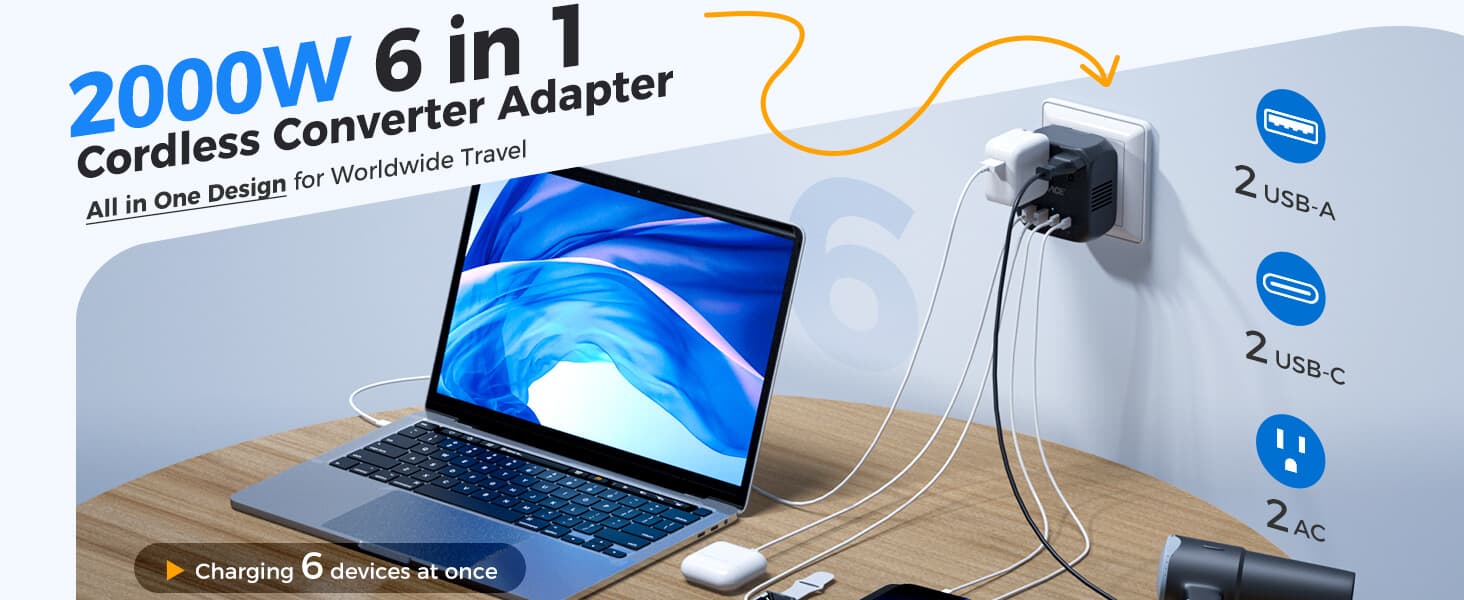
DOACE C15 2000W Voltage Converter
Best for: compatible traditional high-watt 120V devices used within the product instructions, after wattage and load checks.
Not for: Dyson/Shark/Laifen-style smart hair tools, mixed loads through a power strip, unknown labels, or devices that should be bought locally.
Why it fits this page: it covers a narrow high-watt route, not a general adapter route.
Pure sine wave only matters in this buying path when conversion is required for a compatible sensitive device. A smooth sine wave is closer to normal utility AC power than a rough modified or stepped wave. That can matter more for CPAP-related accessories, audio gear, certain motors, or electronics used for long periods. It does not make a converter compatible with every device, and it does not increase the wattage rating.

Figure 5: A pure sine wave route is about waveform quality for compatible sensitive loads, not about making every appliance safe.
Figure 6: Smooth sine output and modified sine output can behave differently with sensitive devices. Use this only when conversion is required and allowed.
When Not to Buy a Converter or Another Adapter
You may not need a converter at all. If every charger in your bag says 100-240V 50/60Hz, the trip is usually about plug shape, outlet access, and charging output. Buying a converter would add bulk without solving a real problem. You may also not need a new adapter for every trip if the destination uses the same plug shape, your hotel provides one, or you are carrying only one wide-voltage charger that already fits the wall.
You should also avoid buying a converter when the device has no readable label, the manufacturer says not to use a converter, the appliance is a complex smart high-watt tool, the wattage is above the converter rating, or the device will run for longer than the converter is intended to support. In those cases, a local appliance, dual-voltage replacement, original manufacturer charger, hotel equipment, or leaving the item at home can be the cleaner answer.
One last check before checkout: name the problem in one sentence. If the problem is "my U.S. plug will not fit the wall," buy plug-shape coverage. If the problem is "my 120V-only device will be used on 230V," do not buy adapter-only hardware. If the problem is "my laptop charger is wide-voltage but I want fewer bricks," choose charging output. If the problem is "I cannot read the label," pause before buying anything.
Build Your Packing List From the Itinerary
A country table works best after you turn the trip into a short itinerary. Write down every country where you will sleep, work, charge devices overnight, or use a high-power appliance. Airport layovers usually matter less unless you expect to charge during a long connection, but hotels, cruise cabins, Airbnb rentals, host family rooms, dorms, conference booths, and safari lodges matter a lot. Then mark the plug type and voltage group beside each stop. This turns a vague question such as "Do I need a Europe adapter?" into a specific packing line such as "UK Type G, France Type E/C, Italy Type L/C/F, all around 230V."
After that, sort your devices into three piles. The first pile is wide-voltage electronics: phone chargers, laptop chargers, tablet chargers, camera battery chargers, action camera chargers, earbuds, and many USB-C power supplies. For this pile, your buying question is usually adapter shape, USB-C wattage, and port count. The second pile is single-voltage appliances: hair tools, steamers, heating pads, small kitchen devices, older toothbrush bases, and specialty gear that says only 110V or 120V. For this pile, the destination voltage decides whether a plug adapter is enough. The third pile is sensitive, medical, grounded, high-watt, or long-runtime equipment. For that pile, a quick country row is not enough; you need the label, wattage, manual, grounding needs, and use duration.
This sorting method prevents overbuying. A traveler with a MacBook Air, iPhone, iPad, camera charger, and headphones may only need one compact GaN travel adapter. A traveler with the same electronics plus a 120V-only curling iron has two separate decisions: GaN for electronics, then converter or dual-voltage replacement for the curling iron. A traveler with CPAP equipment needs to inspect the CPAP power brick before assuming anything; many CPAP power supplies are wide-voltage, but the label and manufacturer instructions are the authority. A family with five devices should think about charging organization, not a U.S. power strip plugged through one adapter.
| Trip type | Likely plug problem | Likely voltage problem | Practical setup | What to avoid |
|---|---|---|---|---|
| One week in London | Type G required | 230V for 120V-only devices | GaN adapter for electronics; converter only for a confirmed compatible single-voltage device. | Using a U.S. hair dryer through a simple shape adapter. |
| Paris, Rome, Zurich route | Type C/E, Type L, Type J awareness | Mostly 230V | Multi-country adapter for wide-voltage devices; country-specific check for grounded or unusual plugs. | Calling the whole trip one generic "Europe adapter" problem. |
| Japan work trip | U.S. two-prong plugs often fit; three-prong may not | 100V and 50/60Hz regional difference | Adapter for three-prong plugs; label check for motors and heat devices. | Assuming identical behavior because the plug shape looks familiar. |
| Brazil beach and city trip | Type N plus possible Type C | 127V or 220V depending on location | Verify local outlet voltage before using single-voltage devices; use GaN for wide-voltage electronics. | Choosing a converter or adapter from the country name alone. |
| Conference abroad | Wall outlets may be far, shared, or recessed | Depends on country | GaN adapter with enough ports; original laptop charger as backup; no U.S. power strip unless fully rated and appropriate. | Overloading one adapter with mixed unknown devices. |
| CPAP travel | Bedside outlet access and plug shape | Often solved by wide-voltage power brick, but confirm | Plug adapter for a 100-240V CPAP supply; medical backup plan; LC-X35 only if conversion is truly required and allowed. | Trying a converter for essential medical equipment without guidance. |
Examples: Same Country, Different Answer
Example 1: France with a laptop, phone, and camera
France commonly points U.S. travelers toward Type C/E plug support and around 230V. If your phone charger, laptop charger, and camera charger all say 100-240V 50/60Hz, the voltage check is already solved by the chargers. You need a plug adapter that fits French outlets and enough charging output for the devices. A 100W GaN route is often enough for a phone, tablet, camera, and many laptops. If a higher-output USB-C laptop is central to your trip, a 140W GaN route may make more sense. No voltage converter is needed for those chargers.
Example 2: France with the same electronics plus a 120V curling iron
The laptop and phone still follow the adapter or GaN route, but the curling iron is a different device class. If it says 120V only, a Type C/E adapter does not make it safe on 230V. You need to check wattage, tool type, manufacturer instructions, and whether a converter is appropriate. A dual-voltage travel curling iron or a local tool may be simpler than packing conversion hardware. This is why a country row cannot produce one answer for the entire suitcase.
Example 3: Japan with U.S. plugs
Japan can feel deceptively easy because many U.S. two-blade plugs fit physically. The voltage is commonly 100V, not 120V, and frequency can be 50Hz or 60Hz by region. Most wide-voltage chargers are fine after the label check. Some U.S. appliances may run weakly, heat differently, or behave unexpectedly. For three-prong plugs, you may need a physical adapter even when voltage is not the main issue. Shape familiarity should not replace the input label.
Example 4: Brazil with a hair tool
Brazil is the place where "by country" thinking can mislead. The plug path points to Type N, but voltage can be 127V or 220V depending on area and building. A 120V-only hair tool may be acceptable in one location and unsafe in another. Before using any single-voltage appliance, confirm the actual outlet voltage with lodging information or outlet marking. The Brazil Type N and mixed voltage guide is worth reading before packing heat tools.
Example 5: A business traveler with one USB-C laptop and several small devices
This is where a GaN travel adapter is often strongest. If the laptop charger and small-device chargers are wide-voltage, the business problem is not voltage conversion. It is charging efficiency: enough USB-C wattage, enough ports, and a plug system that covers the route. A 100W or 140W GaN adapter can reduce the number of wall bricks in the bag. The limit is just as important: it still cannot power a 120V-only appliance or guarantee a grounded path for every work device.
Common Travel Adapter Traps
Trap 1: Treating a hotel universal outlet as a converter
A universal-looking hotel socket may accept several plug shapes. That does not mean it changes voltage. If the room is in a 230V country, the outlet usually supplies local voltage unless it is clearly marked otherwise. A 120V-only appliance can still be damaged even if the plug slides in perfectly.
Trap 2: Plugging a U.S. power strip into a travel adapter
A U.S. power strip can multiply one mistake across several devices. If any connected item is not compatible with local voltage, the strip does not protect it. It can also create loading, grounding, and fuse problems. Read DOACE's U.S. power strip into a travel adapter breakdown before considering that setup.
Trap 3: Forgetting grounding
A two-pin adapter may be fine for many phone and laptop chargers, but it does not create an earth path for a grounded device. Grounding is separate from plug fit and voltage. If the device has a three-prong plug, metal body, medical use, or a grounded power supply, read the grounded vs ungrounded travel adapter guide.
Trap 4: Using one regional word for several countries
Europe, Asia, South America, and Africa are travel regions, not single adapter standards. A London-Paris-Rome-Zurich route may need Type G, C/E, L, and J awareness. A Japan-Korea-Taiwan trip moves across 100V, 220V, and 110V contexts. Write your actual countries down before you choose the adapter.
Frequently Asked Questions
What plug adapter do I need for Europe from the U.S.?
For much of continental Europe, you will commonly see Type C, Type E, or Type F. The UK and Ireland use Type G. Italy can use Type L. Switzerland uses Type J. Denmark has Type K grounding considerations. For phones, laptops, cameras, and tablets with 100-240V chargers, you usually need the right plug adapter or GaN travel adapter. For 120V-only appliances, Europe’s 230V supply means a plug adapter alone is not enough.
Are UK and Europe plug adapters the same?
No. The UK commonly uses Type G with three rectangular pins. Much of continental Europe uses Type C/E/F, and several European destinations have special cases such as Italy Type L and Switzerland Type J. A multi-country adapter can cover many shapes, but you still need to check the device label for voltage.
Do I need a converter if my charger says 100-240V?
Usually no. A charger labeled 100-240V 50/60Hz is built to accept common international voltage. You normally need the correct plug shape and enough charging output. A voltage converter would not help unless another device in your bag is single-voltage and compatible with conversion.
Can I use a U.S. plug in Canada or Mexico?
Often yes for shape. Canada is usually very simple for U.S. travelers. Mexico commonly uses Type A/B and around 127V. Still check labels on appliances, high-watt devices, and grounded plugs. Similar-looking outlets do not remove every safety check.
What adapter do I need for Japan?
Japan commonly uses Type A/B outlets, so many U.S. two-prong plugs fit physically. Three-prong U.S. plugs may need an adapter. Japan is commonly 100V, with 50Hz in eastern areas and 60Hz in western areas, so motors, heat devices, and equipment expecting full 120V deserve extra attention.
What adapter do I need for Australia and New Zealand?
Australia and New Zealand commonly use Type I outlets and around 230V. Wide-voltage chargers need Type I plug support. U.S. 120V-only appliances need a voltage decision, not just a plug adapter.
Why is Brazil harder than many country rows?
Brazil uses Type N, and local voltage can be 127V or 220V depending on the city, building, or outlet. That means the local wall marking or lodging confirmation matters before using a single-voltage device. See the DOACE Brazil Type N guide before packing 120V-only gear.
Can one universal adapter work in every country?
A good universal adapter can cover many plug shapes, but not every outlet, grounding condition, country-specific edge case, or voltage problem. It is best treated as plug-shape help for compatible devices, not as a guarantee that every device can be used everywhere.
Is a GaN travel adapter a voltage converter?
No. A GaN travel adapter is useful for compact multi-port charging and plug-shape convenience, especially for wide-voltage electronics. It does not step 230V down to 120V for a single-voltage appliance.
Is a voltage converter safe for a hair dryer?
Only in narrow cases. A traditional compatible 120V hair dryer may be considered with a properly rated high-watt converter, but smart hair tools, complex digital controls, and devices whose manufacturer forbids converters should not be treated as safe just because a converter has a high wattage number. Hotel or local hair tools are often the cleaner answer.
Do I need grounding for a travel adapter?
It depends on the device. Many phone and laptop chargers are simple on a two-pin route, but some three-prong, metal-bodied, medical, audio, or professional devices may need a grounding path. A two-pin adapter does not create grounding.
What should I pack for a multi-country trip?
List the countries first, then mark their plug types and voltage groups. Put every device into one of three buckets: 100-240V electronics, single-voltage appliances, and sensitive or high-watt devices. Most electronics-heavy trips can be handled with a multi-country GaN adapter. Add a converter only for a specific compatible device that truly needs voltage conversion.
Key Takeaways
- The country tells you the common plug shape and typical voltage; your device label tells you whether it can use that power.
- A plug adapter changes shape only. It does not change voltage or frequency.
- A 100-240V charger usually needs plug-shape support and enough USB-C output, not a voltage converter.
- A 120V-only appliance in a 220-240V country needs a converter check, a local alternative, or a decision to leave it home.
- Europe, Asia, South America, Africa, and the Middle East are not single-adapter regions. Check the exact countries in your route.
- Choose products after the 4-Check: shape, voltage/frequency, device label, and load/use case.


