

Australia and New Zealand are simple as a pair: same plug family, same 230V/50Hz power, same rule for US travelers.
This guide covers what to pack from the US, which devices are safe with an adapter, and when a converter is required. For the general voltage basics, read our 110V/220V traveler explainer.
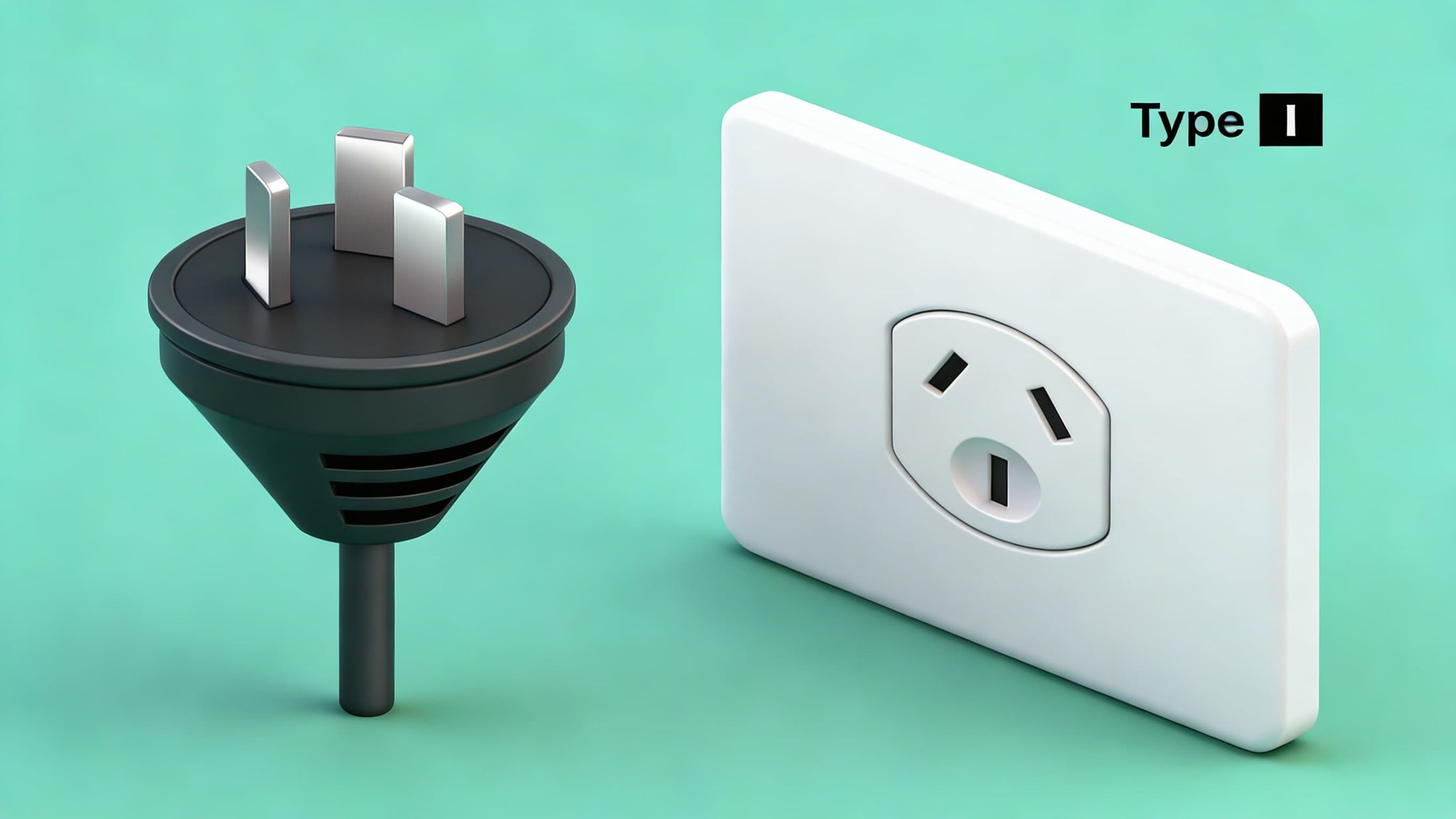
The plug shape is easy to recognize once you see it: Australia and New Zealand use the angled Type I pattern, not the flat US Type A/B plug.
Figure: Voltage doubles from the US to Australia/New Zealand; frequency also changes from 60Hz to 50Hz.
Outlet and Voltage Basics
| Destination | Plug type | Voltage | Frequency | US plug fits? |
|---|---|---|---|---|
| Australia | Type I | 230V | 50Hz | No |
| New Zealand | Type I | 230V | 50Hz | No |
| United States | Type A/B | 120V | 60Hz | Home standard |
Independent plug references list Australia and New Zealand as Type I, 230V, 50Hz destinations. See the Australia and New Zealand entries from WorldStandards for the core electrical data.
A Type I plug has two angled flat blades and, on grounded versions, a vertical grounding pin. US Type A/B plugs do not fit without an adapter.
What US Travelers Should Pack
- For phones, laptops, tablets, cameras: pack a Type I plug adapter or universal adapter. Check for 100-240V on the charger.
- For hair dryers and styling tools: check if the tool is dual-voltage. Many US tools are 120V-only.
- For CPAP or medical devices: verify the power brick label and bring a backup adapter.
- For kitchen appliances: usually leave them at home unless you have a properly rated converter.
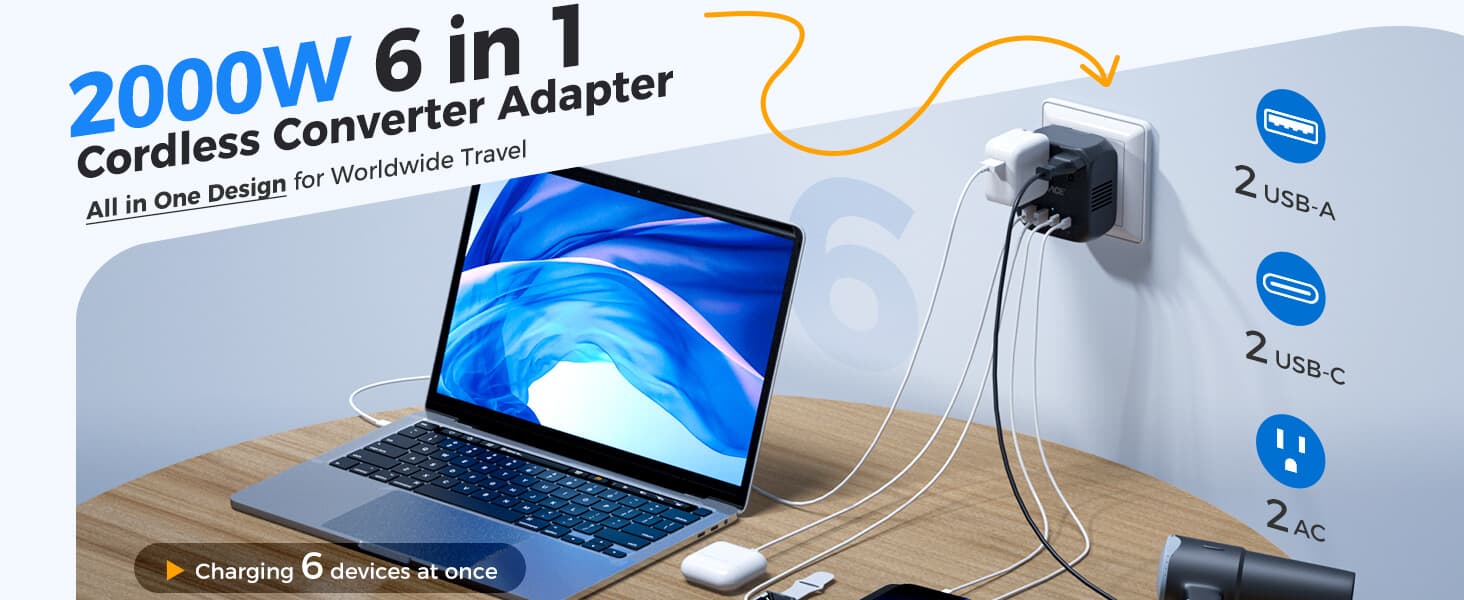
The DOACE 70W GaN Travel Adapter includes an AU-style prong for Type I outlets and USB-C charging for phones, tablets, and many laptops. It does not step voltage down for 120V-only appliances.

When You Need a Voltage Converter
| Device label | In AU/NZ? | What to use |
|---|---|---|
| INPUT 100-240V | Safe with adapter | Plug adapter only |
| 120V 60Hz only | Not safe directly | Step-down converter or local appliance |
| Dual-voltage switch | Safe only on 220-240V setting | Set correctly plus adapter |
| No label visible | Do not guess | Check manual or manufacturer |
If your device is a 120V-only heating appliance, use the wattage tier method before choosing a converter. For high-watt tools, compare the supported category and safety notes on the DOACE C15 2000W voltage converter product page.
Australia vs New Zealand: Any Difference?
For normal travel charging, treat them the same. Both use Type I outlets, 230V, and 50Hz. A single universal adapter with AU prongs covers both countries.
The main difference is your itinerary. Australia road trips may involve campervans, older motels, and outdoor power points; New Zealand trips may involve lodges and camper holidays. In both cases, a compact adapter plus a short charging cable kit is easier than a bulky power strip.
FAQ
Can I plug my iPhone charger into Australia or New Zealand?
Yes if the charger says 100-240V. You still need a Type I plug adapter.
Can I use my US hair dryer in Australia?
Only if it is dual-voltage and set correctly. A 120V-only hair dryer needs a high-watt step-down converter, but using a local dryer is usually better.
Do Australia and New Zealand use the same adapter?
Yes. One Type I or universal AU adapter covers both.


