

If you are traveling from the United States to Moldova, the short answer is yes: you need a plug adapter, and for many 120V-only devices, you also need a voltage converter. The US typically uses 120V / 60Hz electricity with Type A / Type B plugs, while Moldova uses 230V / 50Hz power and mainly relies on Type C and Type F outlets.
That difference matters for two separate reasons. A plug adapter changes the physical plug shape so your charger or appliance can fit the wall socket. It does not reduce voltage. A voltage converter is what steps Moldova's higher voltage down for US single-voltage appliances. If you plug a 120V-only American hair dryer, curling iron, or older grooming tool into a Moldovan outlet without proper conversion, you risk immediate damage, overheating, or failure.
Moldova follows the same broad electrical standard used across much of continental Europe, which means experienced Europe travelers may already own compatible adapters. But for most travelers coming directly from the US, the practical conclusion stays the same: American plugs do not fit Moldovan sockets, and many American appliances do not safely match Moldovan voltage.
This guide explains Moldova voltage and frequency, shows what power outlet type Moldova uses, breaks devices into practical categories, and helps you decide whether you need only an adapter or a proper converter. It also highlights DOACE options for phones, laptops, hair tools, and sensitive electronics.
1. Voltage and Frequency
Moldova standard: 230V, 50Hz.
US standard: 120V, 60Hz.
- Moldova uses almost double the US voltage, which is the biggest safety issue for 120V-only appliances.
- The frequency is different: 50Hz vs 60Hz, which may affect some motor-based, timer-based, or heating devices.
- Plug shapes are not compatible: US devices use Type A/B, while Moldova commonly uses Type C/F.
Safety warning: If you plug a 120V-only American appliance directly into a Moldova outlet, it may burn out instantly, overheat, or become a fire hazard.
The best professional rule is simple: check the label, not the brand name. If a charger or appliance says 100-240V, 50/60Hz, it is usually dual voltage and only needs a plug adapter. If it says 120V only or 110-120V, it needs a voltage converter.
2. What Plug Adapter Do I Need for Moldova?
Moldova commonly uses Type C and Type F sockets.
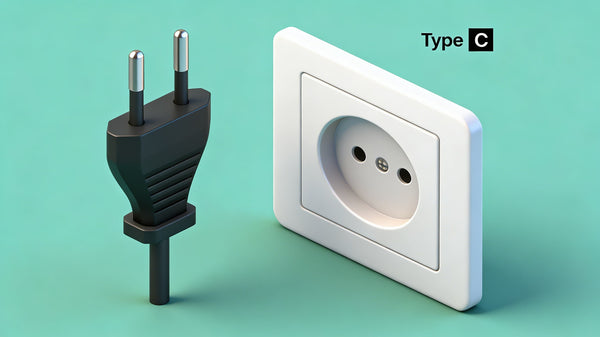

- Type C is the common two-round-pin European plug used by many chargers and lower-power devices.
- Type F is the grounded Schuko format, which usually provides a firmer and more stable mechanical fit.
For many US travelers, a grounded Type F-compatible travel adapter is the safer and more versatile choice. In Moldova, especially in older apartments or partially renovated buildings, recessed outlets are common. A sturdier Schuko-style fit can be more reliable than a very slim generic adapter.
If your American device uses a three-prong plug, a large laptop brick, or a more sensitive power supply, choosing a better-built grounded adapter is usually worth it. This is not about charging speed. It is about stable contact and lower risk of intermittent power.
3. Do I Need a Voltage Converter for Moldova?
Because Moldova uses 230V and the US uses 120V, a voltage converter is required for US single-voltage appliances. Dual-voltage electronics only need a plug adapter.
Use this practical checklist:
- If the label says 100-240V, 50/60Hz: adapter only.
- If the label says 120V only or 110-120V: voltage converter required.
- If it is a high-wattage heat tool: also check whether it is a mechanical-switch device or an electronically controlled device.

Common dual-voltage devices include phone chargers, laptop chargers, tablet chargers, camera chargers, earbuds, watches, and most USB-powered electronics. Common devices that often need a converter include older hair dryers, single-voltage curling irons, straighteners, some toothbrush bases, and some US-only grooming tools.
One detail travelers often miss is the gray area between “it turns on” and “it runs safely.” Some medical devices and sensitive electronics may need cleaner power quality, not just lower voltage. That is why not every converter is equally suitable.
4. Device Categories and Packing Advice
Phones, laptops, tablets, and cameras
These are usually the easiest devices to travel with. Most modern consumer electronics already support global input voltage, so in Moldova they typically need only a reliable plug adapter. If you carry multiple USB-C devices, a multi-port adapter is often more practical than several separate chargers.
Hair tools: dryers, curling irons, and straighteners
This category causes the most damage abroad. Heat-based personal care tools often draw high power and react badly to voltage mismatch. If you bring a traditional mechanical-switch US hair dryer or curling iron, you need a converter with enough wattage. If you bring a Dyson or another electronically controlled styling device, do not assume that “high wattage” alone means compatibility.
CPAP machines, nebulizers, and sensitive electronics
For these devices, clean power matters more than simple voltage reduction. If a device is medically important or electronically sensitive, a pure sine wave converter is often the safer option.
Kitchen appliances and high-surge devices
Portable travel converters are not designed for everything. Juicers, coffee makers, steamers, and irons may have much higher startup surge than their rated power suggests. These are generally poor matches for compact travel converters.
5. If You Are Going to Moldova, Consider These DOACE Products
DOACE GaN 100W International Power Adapter

- Power: 2500W AC passthrough with up to 100W USB-C charging.
- Features: Excellent for wide-voltage devices and multi-device charging.
- Best for: phones, tablets, laptops, cameras, earbuds, and power banks.
- Switch type: travel adapter plug-selection structure.
- Important note: This is a plug adapter, not a voltage converter.
DOACE LC-X30

- Power: 350W.
- Features: AI-controlled voltage and frequency conversion in a compact body.
- Best for: shavers, toothbrushes, camera chargers, lower-power US appliances, and some mid-low power styling tools.
- Switch type: physical side switch.
- Important note: According to the FAQ, it does not include surge protection, which often makes it more cruise-friendly.
DOACE LC-X35

- Power: 500W max, 350W continuous.
- Features: 100% pure sine wave, frequency conversion, and better support for sensitive devices.
- Best for: CPAP machines, nebulizers, precision electronics, and some lower-power hair tools.
- Switch type: touch switch; press and hold for 2-3 seconds.
- Important note: According to the FAQ, its built-in surge protection makes it a poor fit for many cruises.
DOACE HC-X11

- Power: 2200W.
- Features: built for high-wattage US heating tools in 220-240V countries.
- Best for: mechanical-switch hair dryers, curling irons, and flat irons.
- Switch type: plug and play.
- Important note: According to the DOACE FAQ, it should not be used with Dyson or other electronically controlled styling tools.
6. Practical Travel Tips
Phones, laptops, and power banks: Most are already dual voltage, so a good plug adapter is usually enough.
Hair dryers and curling irons: A dual-voltage travel version is usually the cleanest option. If you bring a US-only model, match the converter to the device’s wattage and compatibility profile.
Prepare in advance: Sort devices before departure into “adapter only” and “converter required.” Bring at least two adapters if outlet access may be limited.
Hotels and airports: Do not rely on hotel desks or airport shops as your main backup plan. Availability is inconsistent.
Outlet choice: In Moldova, grounded Type F-compatible adapters often provide a more stable fit, especially in older or recessed sockets.
Frequency tip: Most modern chargers handle 50Hz well, but some clocks, timers, or older motor-based devices may behave differently from how they do in the US.
Check every label: If it says 100-240V, adapter only. If it says 120V only, use a converter.
Press and hold to start: If you use the LC-X35, remember it requires a 2-3 second press-and-hold to switch on.
Avoid certain appliances: Do not use portable travel converters with juicers, coffee makers, steamers, or irons with extreme startup surge.
Watch outlet depth: A firm grounded fit matters more than a loose connection that only “technically works.”
Cruise policy: If your itinerary includes a cruise segment elsewhere in Europe, choose a model without surge protection if the cruise line restricts such devices.
Warranty and support: According to the DOACE FAQ, DOACE products include a 1-year warranty.
7. Frequently Asked Questions
Q1: Can I charge my iPhone and MacBook in Moldova without a converter?
A: In most cases, yes. Most Apple chargers support 100-240V / 50-60Hz, so you only need a plug adapter. Still, check the label before you leave.
Q2: Do I always need a voltage converter for Moldova?
A: No. You only need one for 120V-only devices. Dual-voltage electronics only need an adapter.
Q3: Are Moldova plugs the same as in other European countries?
A: In practical terms, yes for many travelers. Moldova commonly uses Type C and Type F, like many continental European countries.
Q4: Why will my Dyson hair dryer not work with a 2000W converter?
A: According to the DOACE FAQ, high-power converters are primarily designed for mechanical-switch heating tools. Dyson products use more advanced electronic controls and may not be compatible.
Q5: How should I choose between LC-X35 and LC-X30?
A: Choose LC-X35 if you need cleaner pure sine wave output and better support for sensitive equipment. Choose LC-X30 if you prioritize compactness, lighter weight, and cruise-friendliness.
Q6: Can I use DOACE products on a cruise?
A: Yes, but choose carefully. Models without surge protection are usually the safer cruise option. LC-X35 may be restricted because it includes surge protection.


