

Last Updated: March 2026 | Written by an experienced US-based travel electronics specialist
If you're planning a trip from the United States to Russia, one of the most overlooked — yet critical — travel preparations is ensuring your electronic devices will work safely overseas. The short answer: Yes, you will need a plug adapter, and depending on your devices, you may also need a voltage converter. But the full picture is more nuanced than a simple yes or no.
In this comprehensive guide, we'll break down everything you need to know about Russia's electrical system, what adapter types you need, which devices require a converter, and how to avoid frying your electronics abroad.

Understanding the Electrical Differences: US vs. Russia
Before you start shopping for adapters and converters, it's essential to understand why there's a compatibility issue in the first place.
| Specification | United States | Russia |
|---|---|---|
| Standard Voltage | 120V | 220V |
| Frequency | 60 Hz | 50 Hz |
| Plug Type | Type A (2 flat pins), Type B (2 flat pins + grounding) | Type C (2 round pins), Type F (2 round pins + grounding clips) |
As you can see, there are two fundamental incompatibilities: the shape of the plug and the voltage/frequency of the electrical supply. Let's examine each in detail.
Part 1: Plug Adapters — Bridging the Physical Gap
What Plug Types Does Russia Use?
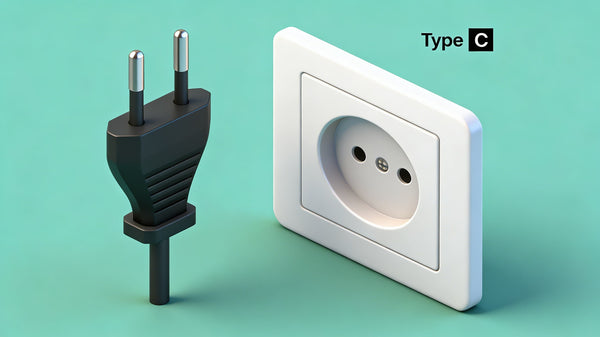
Russia primarily uses Type C and Type F plugs and outlets.
- Type C (Europlug): This is the ungrounded, two-round-pin plug common across most of Europe, Russia, and parts of Asia. The pins are 4.0–4.8 mm in diameter and spaced 19 mm apart.
- Type F (Schuko): This is the grounded version, featuring two round pins plus two grounding clips on the sides of the plug. It's the standard for appliances that require a ground connection.

What Plug Types Does the US Use?
The United States uses Type A and Type B plugs.
- Type A: Two flat parallel pins — the standard ungrounded plug.
- Type B: Two flat parallel pins plus a round grounding pin.


Why You Absolutely Need a Plug Adapter
US plugs (flat pins) simply will not physically fit into Russian outlets (round pin sockets). A plug adapter is a passive device that changes the shape of the plug so it fits into the foreign outlet. It does not convert voltage or frequency.
Which Adapter Should You Buy?
You need a US-to-Type C or US-to-Type F adapter. Here are your best options:
- Dedicated US-to-Europe adapter — Small, lightweight, and inexpensive ($5–$10). Look for one that accepts both Type A and Type B US plugs.
- Universal travel adapter — Accepts plugs from many countries and works in multiple outlet types worldwide. More versatile if you travel frequently. Price range: $15–$35.
- Universal adapter with built-in USB ports — The most practical option for modern travelers. Many quality models include 2–4 USB-A ports and 1–2 USB-C ports.
Pro Tip: Bring at least two adapters. Hotel rooms in Russia often have limited outlet availability, and having a backup ensures you're never stuck with a dead phone.
Important Note on Grounding
If your US device uses a three-prong (Type B) plug, it requires grounding for safety. A simple Type C adapter will not provide grounding. In this case, opt for a Type F (Schuko) adapter that supports the grounding clips, or use a universal adapter that accommodates grounded plugs.
Part 2: Voltage Converters — Protecting Your Electronics
This is where things get more technical — and more important for the safety of your devices.
The Voltage Problem Explained
The US electrical grid operates at 120 volts, 60 Hz. Russia's grid runs at 220 volts, 50 Hz. This is nearly double the voltage.
Plugging a device designed exclusively for 120V into a 220V outlet without a converter can result in:
- Immediate device failure (burned-out motor or heating element)
- Fire hazard (overheated wiring)
- Electric shock risk
- Tripped circuit breakers at your accommodation
Do You Actually Need a Voltage Converter? It Depends on Your Device.
Here's the critical step most travelers skip: check the label on your device's power supply or charger.
Every electronic device and its charger has an electrical specification label. Look for the input voltage range.
Scenario 1: Your Device Says "Input: 100–240V, 50/60Hz"
You do NOT need a voltage converter. This device has a built-in dual-voltage or multi-voltage power supply.

Common devices with dual-voltage power supplies include:
- Smartphone chargers
- Laptop chargers
- Tablet chargers
- USB-powered devices
- Most modern camera battery chargers
- Electric toothbrush chargers
- Many newer hair styling tools
Scenario 2: Your Device Says "Input: 120V, 60Hz" (Single Voltage)
You NEED a voltage converter. Without one, plugging this device into a Russian 220V outlet will likely destroy it.
Common single-voltage devices include:
- Older hair dryers and straighteners
- Curling irons (non-dual-voltage models)
- Some American-made kitchen appliances
- Older battery chargers
- Some American-brand electric shavers
- Heating pads and electric blankets
- Certain power tools
Types of Voltage Converters
Not all converters are created equal. Choosing the wrong type can still damage your devices.
1. Step-Down Voltage Converter (Transformer-Based)
- Converts 220V → 120V
- Best for motorized and heated devices
- Heavier and bulkier
- More reliable for continuous use
- Price range: $25–$80 depending on wattage capacity
Key specification: Check the wattage rating. A hair dryer typically draws 1,200–1,875 watts. Your converter must be rated at or above the wattage of the device you're using.
2. Electronic Voltage Converter
- Lighter and more compact
- Works well for simple heating devices
- Not recommended for devices with motors, digital circuits, or microprocessors
- Price range: $15–$40
3. Combination Converter/Transformer
- Offers both converter and transformer modes
- Versatile but more expensive
- Good for travelers who bring a variety of devices
- Price range: $40–$100
Expert Recommendation: For most US travelers going to Russia, the best strategy is to avoid bringing single-voltage devices altogether. Buy a dual-voltage hair dryer or straightener before your trip, and you'll eliminate the need for a bulky, expensive converter entirely.
Part 3: The Frequency Factor — 60Hz vs. 50Hz
Most articles overlook this, but the frequency difference between the US (60 Hz) and Russia (50 Hz) can matter for certain devices.
What Does Frequency Affect?
- Motorized devices: Clocks, turntables, and some fans designed for 60 Hz will run approximately 17% slower on 50 Hz.
- Transformer-based chargers: The lower frequency can cause the transformer to run hotter and less efficiently.
- Modern switching power supplies: These are unaffected by frequency differences.
Practical Impact for Travelers
For the vast majority of travelers, the frequency difference is irrelevant. Your phone, laptop, camera, and tablet chargers can handle both 50 Hz and 60 Hz without issue.
Part 4: Russia-Specific Electrical Considerations
Outlet Variations Across Russia
- Older Soviet-era buildings may have outlets with slightly smaller pin spacing.
- High-end hotels in Moscow and St. Petersburg may offer USB charging ports and universal outlets.
- Budget accommodations in smaller cities may have older electrical infrastructure.
Surge Protection Matters
Russia's electrical grid, particularly in older buildings and smaller cities, can experience voltage fluctuations and power surges. Protect your expensive electronics:
- Use a surge-protecting power strip from home
- Consider a portable surge protector adapter designed for travel
- Unplug sensitive devices during thunderstorms
Russian Electrical Safety Standards
Russia follows the GOST R electrical standards. The standard residential voltage is 220V ±10%, meaning actual voltage can range from 198V to 242V.
Part 5: Recommended DOACE Products for Travel to Russia
DOACE GaN 100W International Power Adapter

- Power: 2500W AC output, USB-C up to 100W fast charging
- Features: Great for Russia's common Type C/F travel scenarios and wide-voltage devices
- Best for: iPhone, MacBook, cameras, power banks, and other 100–240V devices
- Switch type: Slide-out plug design, plug and play
- Important note: This is a plug adapter, not a voltage converter
DOACE LC-X30 350W

- Power: 350W
- Features: Built-in AI chip, 220V to 110V, and 50Hz to 60Hz conversion
- Best for: Shavers, electric toothbrushes, camera chargers, and some low-power styling tools
- Switch type: Side physical switch
- Important note: Better for portability, but not suitable for high-power hair dryers
DOACE LC-X35 500W Max

- Power: 500W Max (350W continuous)
- Features: 100% pure sine wave, 220V to 110V, and 50Hz to 60Hz conversion
- Best for: CPAP machines, nebulizers, precision electronics, and some lower-power styling tools
- Switch type: Touch switch, press and hold for 2–3 seconds to turn on
- Important note: Not recommended for cruises and not suitable above its continuous power limit
DOACE HC-X11 2200W

- Power: 2200W
- Features: Designed for high-wattage 110V American heating appliances
- Best for: Traditional mechanical-switch hair dryers, curling irons, and flat irons
- Switch type: Plug and play
- Important note: Not suitable for Dyson or other devices with electronic switches, touch controls, or precision chips
Part 6: Frequently Asked Questions
Can I charge my iPhone/Samsung in Russia without a converter?
Yes. All modern smartphone chargers are rated 100–240V and only require a plug adapter.
Can I use my MacBook/laptop in Russia?
Yes. Virtually all laptop power adapters are dual-voltage (100–240V). You just need a plug adapter.
Will my hair dryer work in Russia?
It depends. If it says 120V only, you need a heavy-duty voltage converter rated for the dryer's wattage.
Can I buy adapters in Russia if I forget mine?
Yes, but selection may be limited and prices can be higher, especially at airports.
What about the Trans-Siberian Railway? Are there outlets on trains?
Most modern Trans-Siberian trains have 220V outlets (Type C/F) available in compartments or corridors.
Is the voltage the same across all of Russia?
Yes. The standard across the entire Russian Federation is 220V, 50Hz with Type C and Type F outlets.
Part 7: Top Product Recommendations (2026)
Based on extensive testing and traveler feedback, here are proven product recommendations:
Best Plug Adapters
- Ceptics US to Europe Adapter (Type C) — Compact, reliable, affordable
- EPICKA Universal Travel Adapter — All-in-one with multiple USB ports
- Zendure Passport III — Premium universal adapter with GaN charging
Best Voltage Converters
- BESTEK Universal Travel Adapter and Voltage Converter
- ELC T-2000 Step-Down Voltage Converter
- DOACE 2200W Voltage Converter
Best Dual-Voltage Hair Dryers
- Conair MiniPRO Tourmaline Ceramic Travel Hair Dryer
- BaBylissPRO Nano Titanium Travel Dryer
Conclusion
Traveling from the US to Russia requires some electrical preparation, but it's straightforward once you understand the basics:
- You ALWAYS need a plug adapter — US flat-pin plugs don't fit Russian round-pin outlets.
- You only need a voltage converter if your device is rated for 120V only.
- Always check the label on every device and charger before packing.
- When in doubt, go dual-voltage.
- Pack a power strip and surge protector for convenience and safety.
With the right preparation, you'll keep all your devices charged, safe, and functioning throughout your Russian adventure — whether you're exploring the Kremlin, riding the Trans-Siberian Railway, or working remotely from a St. Petersburg café.
Disclaimer: Electrical standards and product specifications can change. Always verify the input voltage on your specific devices before traveling. This article is for informational purposes and does not constitute professional electrical advice.


